Good Is Where Great Goes to Die

The hardest prison to escape is not a bad life. It's a good one.
Think about it. Bad generates escape energy. Bad makes the cost of staying obvious and the cost of leaving easy to justify. When things are broken, you have permission to fix them. When things are failing, you have permission to walk away.
But good? Good is a different kind of trap.
Good provides just enough to make leaving feel like madness.
Good says:
- Look at what you have.
- Look at what you've built.
- Who do you think you are to want more?
- You should be grateful….
This is why the most stuck people I meet are rarely the ones who failed.
They're the ones who succeeded. At something other than what they were made for.
We misunderstand what "good is the enemy of great" actually means.
We hear it as a warning against complacency. A motivational nudge to stop settling.
We nod along, assume the problem is laziness or fear or lack of ambition.
It's none of these.
The problem is investment.
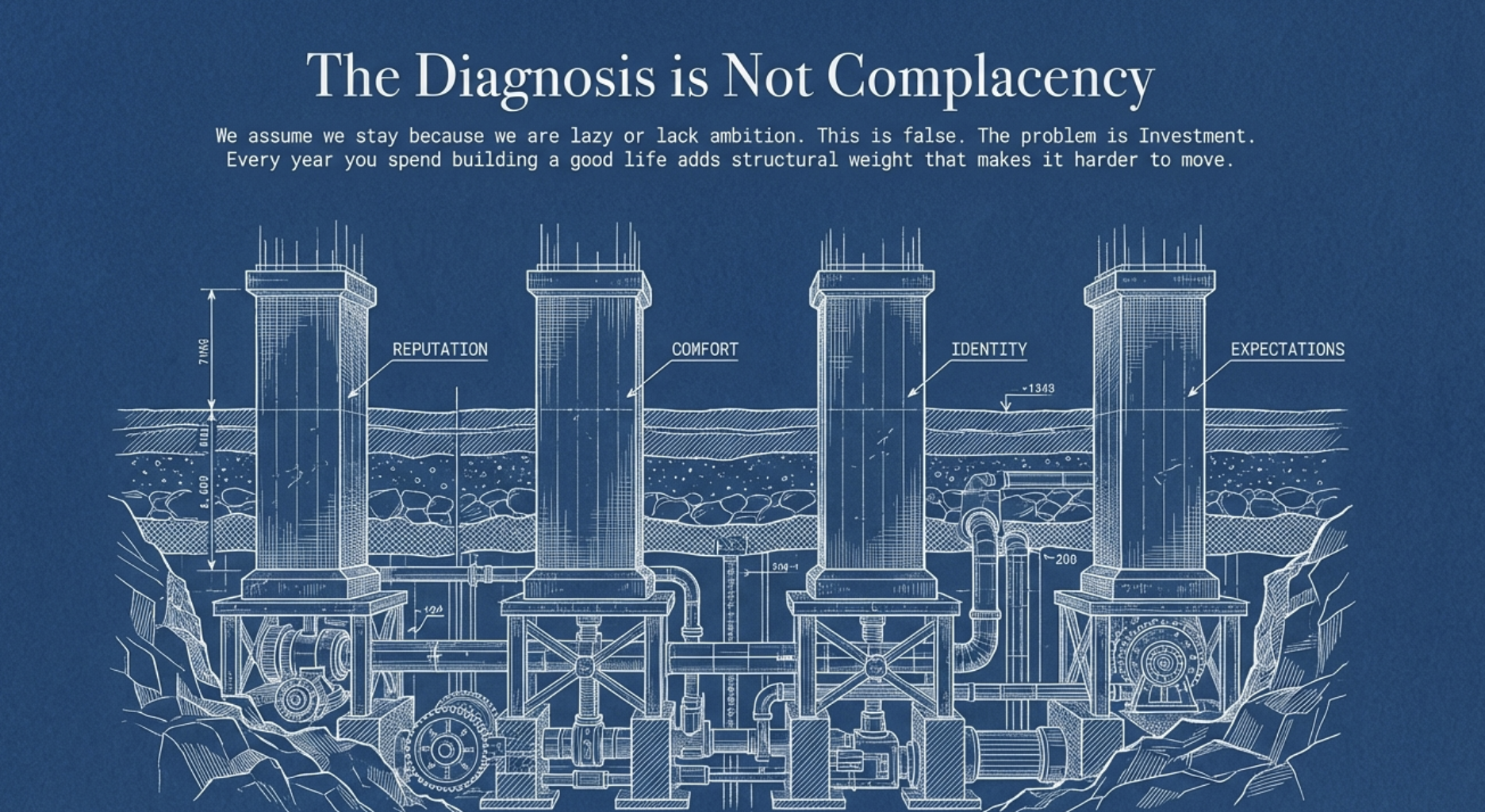
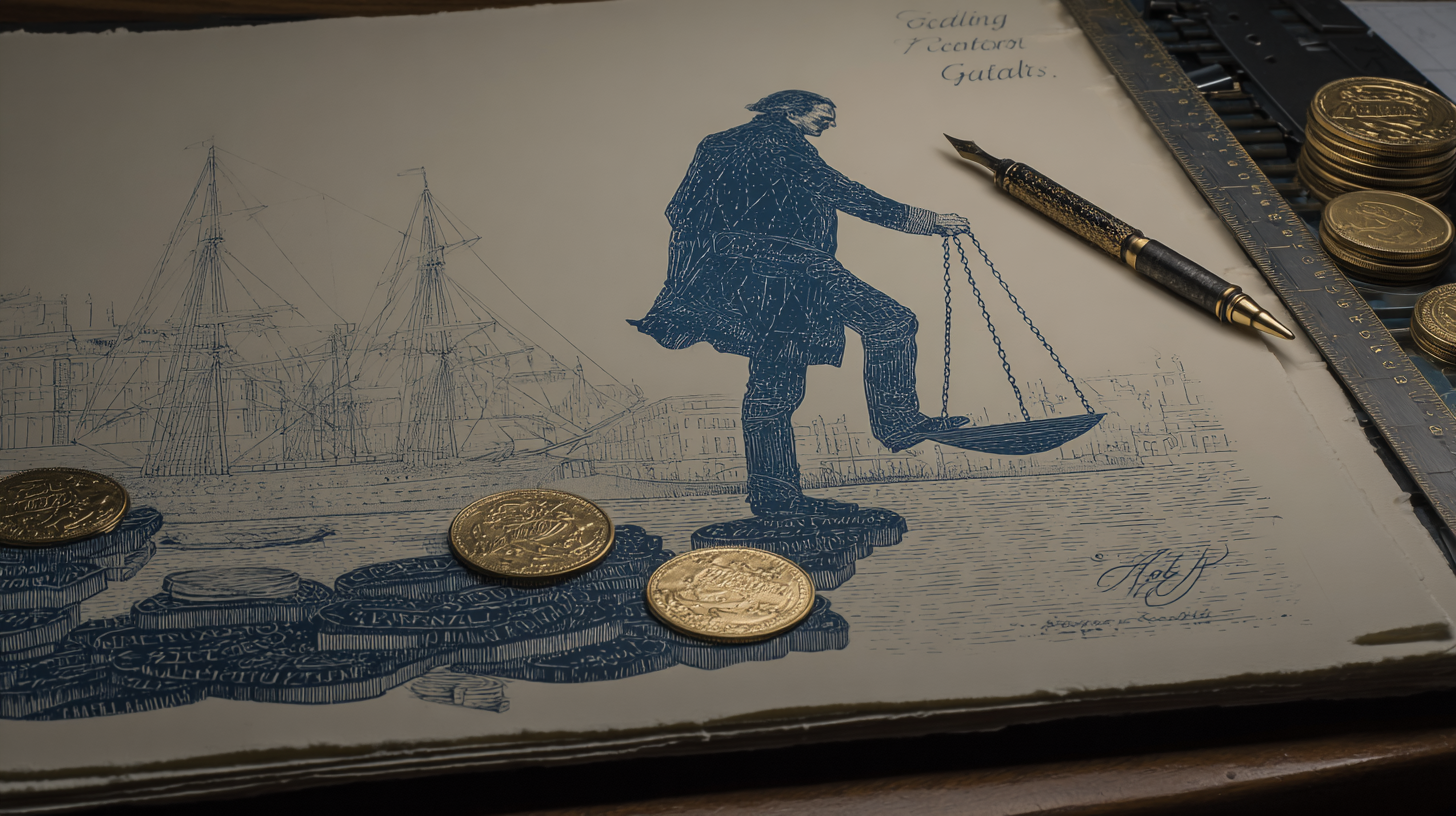
Every year you spend building a good life adds weight to the scale against building a different one. Every relationship formed around your current identity. Every reputation earned. Every comfort established. Every expectation (yours and others') that quietly solidifies into a structure you now live inside.
This is not metaphor. This is mechanism.
Loss aversion is one of the most replicated findings in behavioral psychology. Kahneman's research is clear: losses feel roughly twice as painful as equivalent gains feel good. Losing a hundred dollars hurts more than finding a hundred dollars helps. This isn't a character flaw. It's just how we're wired.

Now apply this to a life you've spent two decades building.
The sunk cost fallacy is well documented in business. Executives understand it. They know past investment shouldn't determine future decisions. They kill underperforming projects without sentiment. They reallocate resources ruthlessly. They would never keep funding something just because they'd already spent money on it.
And then they go home and spend another decade in a life that stopped fitting years ago.
Because the skill doesn't transfer. Because when the underperforming project is your own existence, the math feels different. Every hour you invested in becoming who you are now sits on the scale. The sunk costs accumulate silently. And good (with its steady returns, its reasonable satisfactions, its absence of crisis) provides exactly enough to make the weight feel justified.
This is the mechanism underneath the platitude. Good doesn't defeat great through complacency. Good defeats great through accumulated investment that makes change feel like loss.
I talked to Gary Fabbri about this on my latest podcast. He spent years building a career in film. Companies, projects, the kind of work that looked right from every angle.
He calls it, without flinching, his Shadow Career.
Steven Pressfield named this pattern: the shadow career runs parallel to your real calling. Close enough that you can tell yourself you're on the path. Far enough that you never risk what the real path would cost. The artist becomes a gallery owner. The writer becomes an attorney. The creator becomes the person who supports creators.
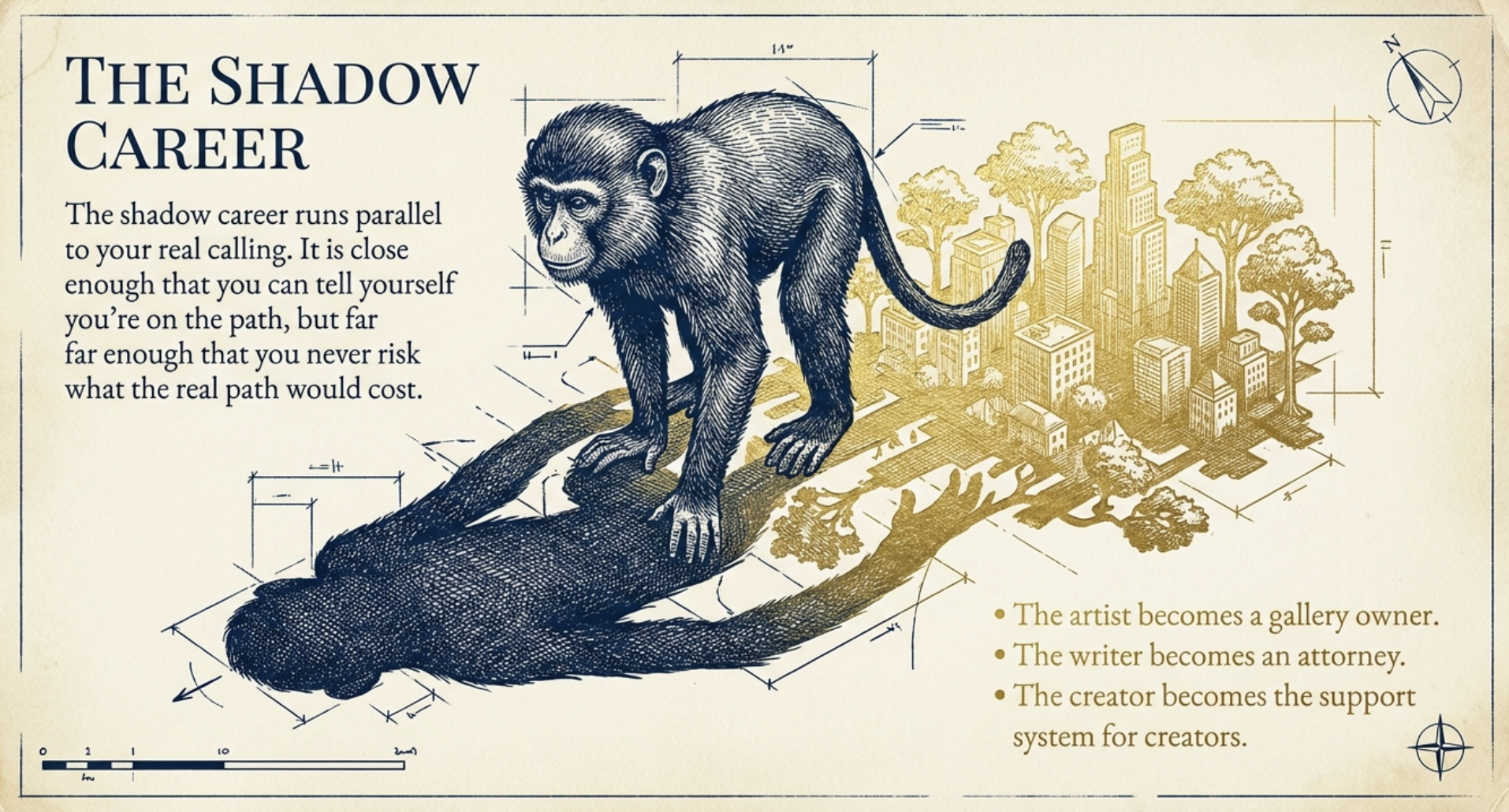
The shape is similar. The contours feel tantalizingly the same. But a shadow career carries no real risk. If you fail at it, the failure doesn't actually touch you. Because it was never really yours.
Here's what makes the shadow career so effective as a trap: it's not bad. It's good. It provides security, status, the quiet relief of not being seen as a failure. And every year you spend in it adds another layer of investment to the scale.
Gary's kept feeling the same thing: This can't be it.
This is the layer beneath the mechanism.
The weight on the scale isn't just practical investment. The years, the relationships, the reputation. The deeper weight is that wanting more feels like betrayal. Betrayal of the life you built. Betrayal of the people who supported you building it. Betrayal of your own past choices.
If this good life isn't enough, what does that say about the person who chose it?
I know this territory from the inside.
For years I lived what looked like the right life. Built what I was supposed to build. Achieved what would earn respect. And my wife kept naming what I couldn't see. This isn't it. This can't be all there is.
Honestly, initially I heard it as a threat. It took me too long to recognize she was offering permission. Permission to want what I actually wanted. Permission to name the desires that felt dangerous to speak. Permission to stop pretending that good was the same as true.
Here's what I've come to believe: the final barrier is not capability. Most of us are capable of far more than we're currently doing. The final barrier is permission. Permission to want something beyond what your accumulated investments have built. Permission to risk the good in pursuit of something that might not work but would at least be yours.

What we're too afraid to want, we're too afraid to build.
You probably already know whether this is about you.
You know whether the life you've built is the life you were made for, or the one that was safe to want. You know whether your success is a floor you're standing on or a ceiling you're pressing against. You know whether your good life is a gift or a gilded cage.
The weight on the scale is real. The investment is real. The loss aversion isn't weakness. It's wiring.
But here's what's also true: the costs you're avoiding by staying are visible. The costs of staying are hidden. The years you don't spend doing what you were made for. The version of yourself that never gets to exist. The permission you never grant.
The question is not whether you're capable of more.
The question is whether you'll let yourself want it.