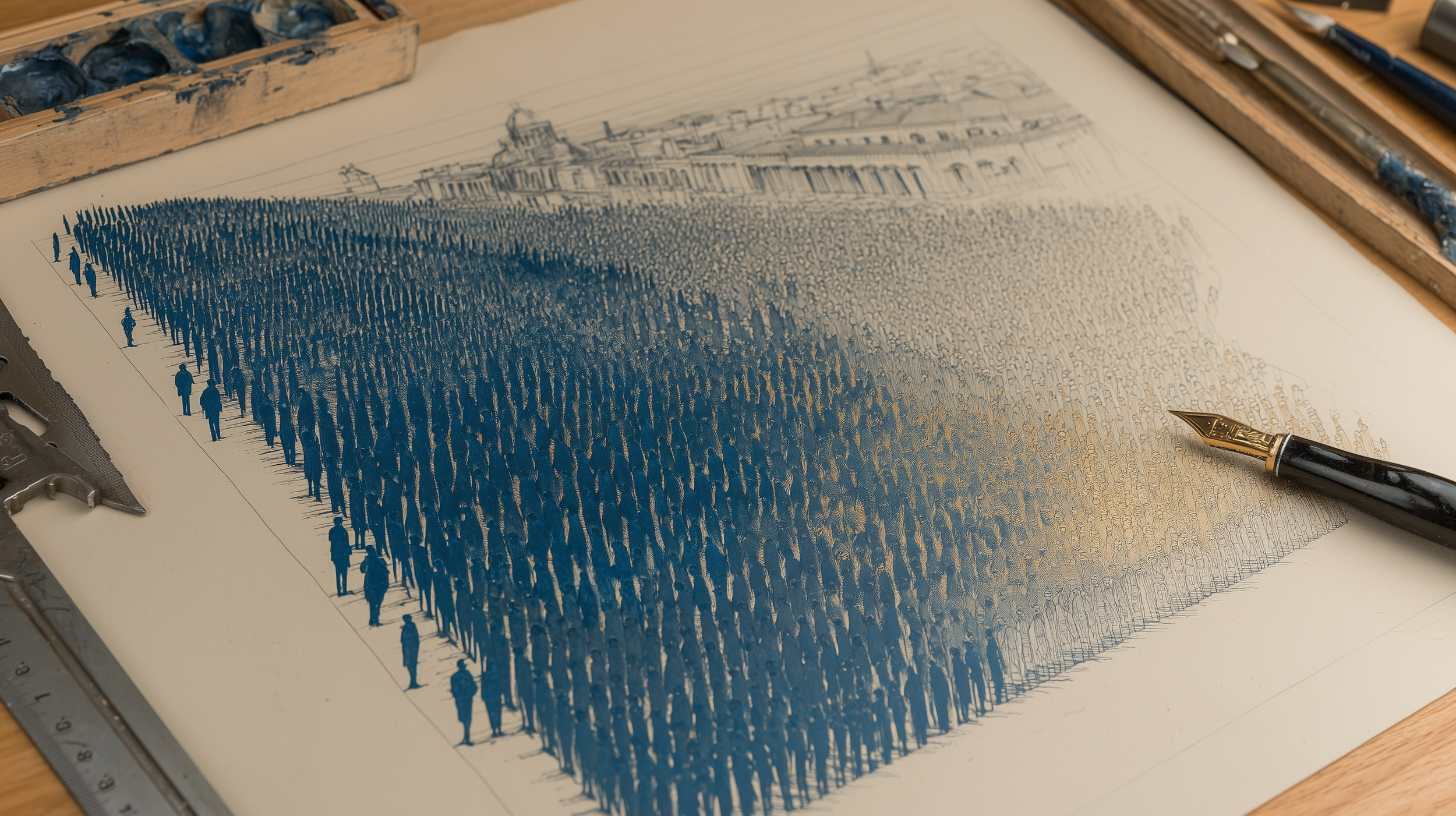
Build Builders, Not Users

The skill that made you valuable just became free. What you develop next determines everything.
Anton Osika runs Lovable, one of the fastest-growing software companies in history. When he talks about what's actually changing, he doesn't mention productivity or efficiency.
"The biggest bottleneck in business is shifting. From 'Who can build it?' to 'Who knows what to build?'"
This is the talent development question for 2026. And most companies are answering it wrong.
The Bottleneck Shifted
For decades, execution was the constraint. You had the idea. You needed people who could build it. Engineers, designers, specialists. The scarce resource was capability.
That constraint just evaporated.
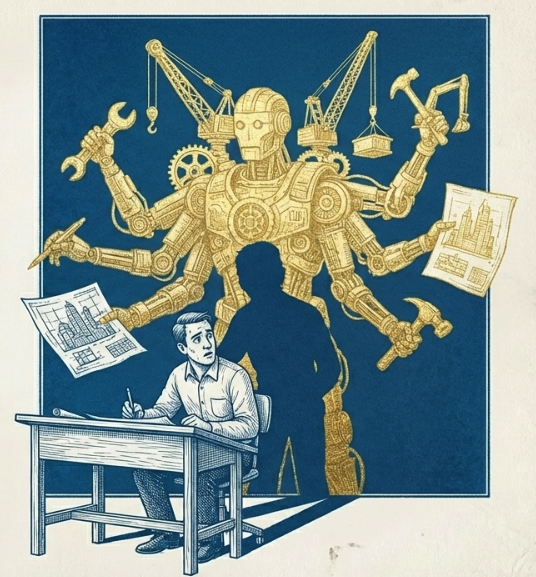
I watched it happen in 2025. People who couldn't code six months ago now ship working products. Marketing coordinators build automation systems. Analysts construct dashboards that would have required a development team. The tools got good enough that "who can build it" stopped being the question.
The new scarcity isn't execution. It's knowing what's worth executing. The judgment to see which systems matter. The taste to know when something is valuable versus just technically impressive.

What a Builder Actually Is
Here's the split I saw emerge in 2025.
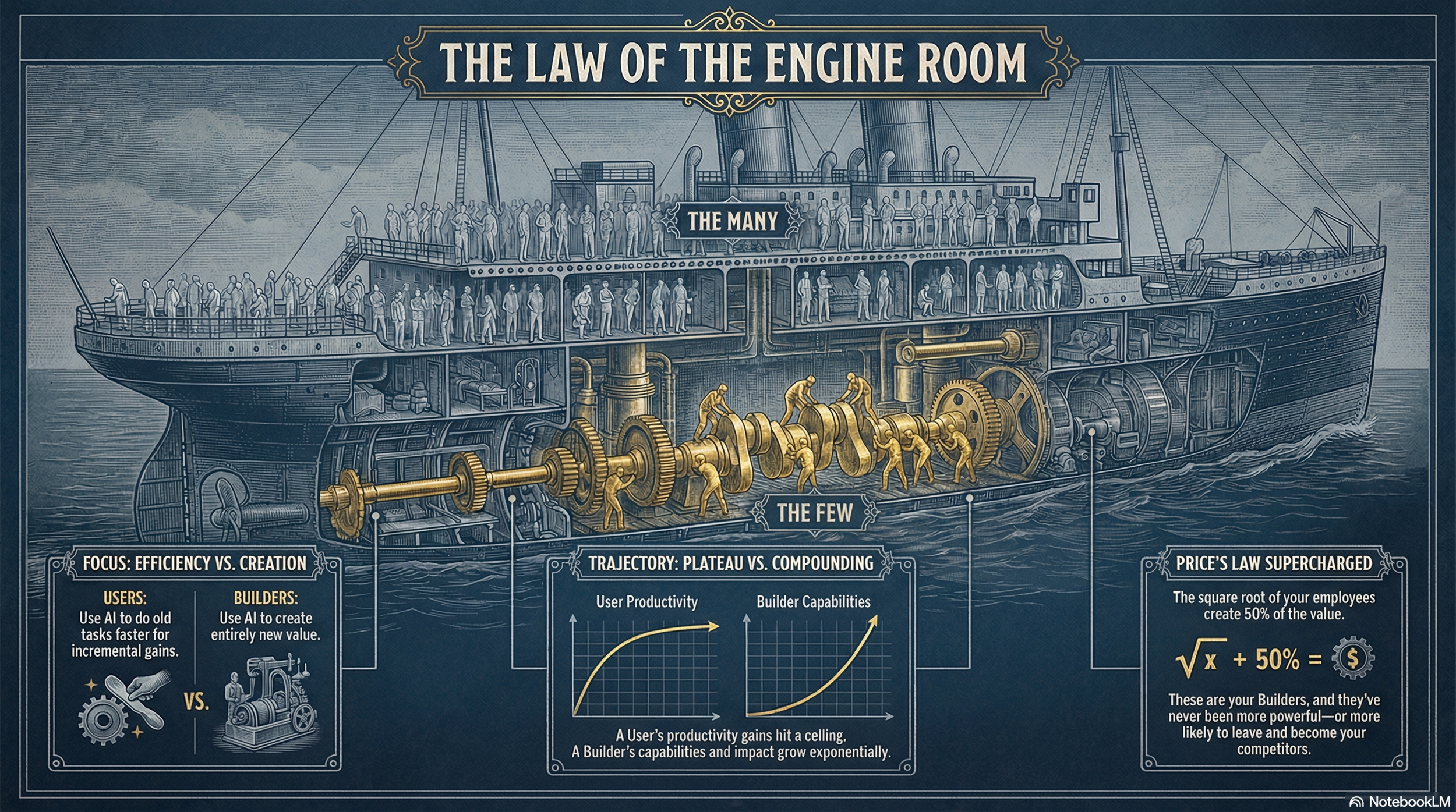
Some people use AI to do their existing jobs faster. Better prompts. Faster summaries. More efficient content generation. They get genuine productivity gains. Maybe 20-30% improvement. Bottom line stuff.
That's not building.
Building is something else entirely. It's the realization that nothing stops you anymore. You have an idea on Monday, you can have a working product by Friday. You don't need external capital. You don't need a five-year education. You can learn a completely new skill over a weekend and ship something built on that skill the following week.

A year ago I couldn't code. Now I develop AI systems that can build what I imagine. Not simple prompting. I'm talking Claude Code, Claude Projects, Lovable, context management, MCPs. The full stack of how you actually create things with these tools. I am the business brain who knows where customer value lies. And I can operate the machinery to make it real.
This changes everything.
The entire LinkedIn ROI debate is stuck on the wrong question. Everyone measures how much faster we can do the old things. Almost nobody measures the new things that are now possible. Bottom line optimization when the real opportunity is top line creation.
A user makes existing work faster. A builder creates value that didn't exist before.
Why Users Plateau and Builders Compound
Users hit a ceiling.
You can only summarize documents so fast. Once you've optimized your existing workflows, you're done. Maybe you're 30% more productive. That's real. It's also where it ends.
Builders don't have a ceiling. Every system I build makes the next one easier. Every capability I create can be reused, adapted, combined. What took me a week in January takes me a day now. Not because I got faster at the same task. Because I built infrastructure that makes new tasks possible.
Companies with builders operate in a different dimension than companies with users. Not 30% more productive. Fundamentally different in what they can create.
What This Means for 2026
Most companies are training users.
Prompt engineering workshops. AI certifications. Sessions on "how to use ChatGPT effectively." All oriented around making people better operators of existing tools.
This isn't wrong. It's just not ambitious enough.
The real question isn't "how do we get our people to use AI better?" It's "how do we develop people who can build things that didn't exist before?" That's a fundamentally different capability. And almost nobody is developing it.
The talent development choice for 2026: Do you want people who can optimize what you already have? Or people who can create what you don't have yet?
The Talent Problem Nobody's Talking About
Here's what happens when someone becomes a builder inside your organization.
They save eight hours on a task that used to take ten. What do they get? Eight more hours of their old job. The efficiency gains get extracted.
The builder gets nothing.
This is driving what I call the secret cyborg phenomenon.
People using far more AI than they admit. Why? Because for the first time in years, they can actually finish their work within normal hours. They're protecting that fiercely. They have zero incentive to surface their gains.
Now compound this problem.
Price's Law says the square root of employees produce half the output. In a company of 100 people, roughly 10 people generate 50% of the value. These are your builders. They've always been your builders. And they're now becoming supercharged.
They're also the ones most likely to realize they don't need you anymore.
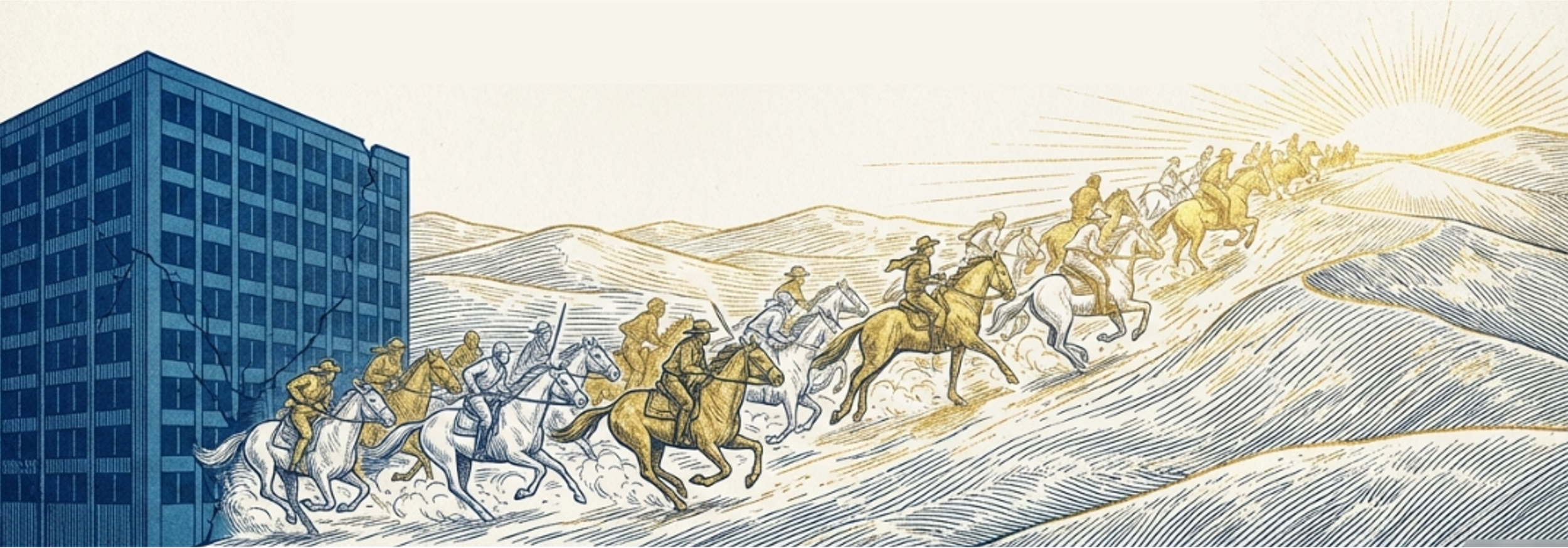
The path from employee to entrepreneur has never been shorter. I talk to people making this switch every week. Same story: "I became faster than the system. I can't stand waiting for the system anymore." They're not leaving for competitors. They're leaving to become competitors.
Wages have stagnated for years. The old deal was stability and salary in exchange for your best ideas. But stability means less when you can build a business in six months. Salary means less when the upside of ownership is unlimited.
How do you keep your builders? You have to answer the incentive question. Give them space to create. Let them capture some of the value they generate. Make staying more attractive than leaving.
The companies that solve this will turn their builders into intrapreneurs. The companies that don't will watch their highest-potential people walk out the door.
Build Builders
The bottleneck shifted. Execution isn't scarce anymore. Judgment is.
The question isn't whether your people can use AI. They probably already can. The question is whether you're developing people who can build new value. And whether you're giving them reasons to build it for you instead of for themselves.
Users plateau. Builders compound. And builders who feel trapped will leave.
Every training dollar you spend in 2026 is a bet. A bet on users locks in efficiency gains that stop growing. A bet on builders creates capability that keeps compounding. But only if you solve the incentive problem.
The machines are about to be everywhere.
What you're developing in your people is the only thing that won't be.
Build builders. Then give them something worth building for.