The Expertise Margin
Your three most experienced application engineers carry the knowledge that justifies your margin premium. If two left this year, how much of that expertise could your remaining team deliver? A briefing for specialist distribution CEOs navigating the structural shift from availability to advisory.
What changes for the specialist distributor as AI enters its industry
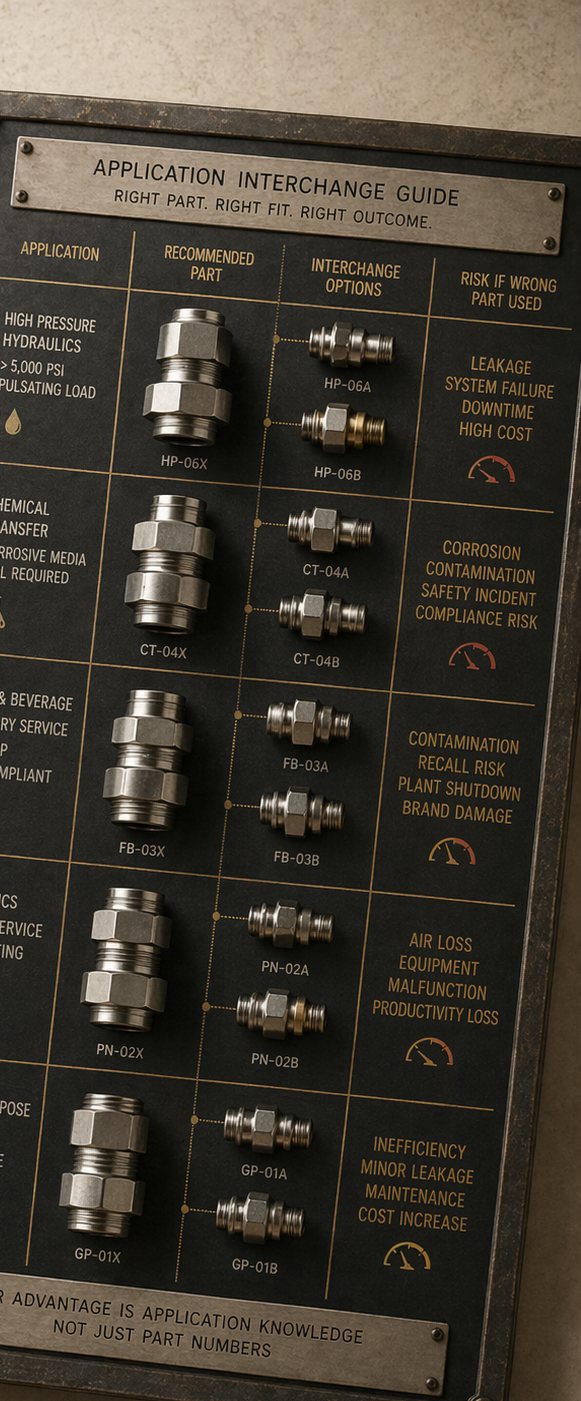
Specialist industrial distributors built their margin premium on a single asset: application engineering expertise that manufacturers' direct channels could not match. The seller who knows which product actually works at 80°C in a washdown environment justifies a 10 to 20 percentage point margin above commodity distribution. That expertise is the entire business case for the distributor's existence. Without it, the distributor is a warehouse with a website.
Two structural forces are compressing the model simultaneously. Digital procurement platforms are eliminating the margin on product availability. Autonomous buying systems are filtering, validating, and recommending products before a human buyer intervenes. The margin from simply having the product in stock is approaching zero. At the same time, manufacturers are investing in direct digital channels that let customers bypass distribution entirely. The distributor's only defensible position is the application expertise that neither the platform nor the manufacturer can replicate.
But that expertise sits in individual sellers' heads. The application engineer who carries fifteen years of product and environment knowledge is the margin. When that person leaves, the accounts they managed start requesting competitive quotes within months. Eighty-five percent of European companies report insufficient technical talent to replace them. The margin premium that justifies the entire business model is concentrated in a handful of people who could leave at any time.
The strategic move is to convert application expertise from a personal competence into a firm-level capability. AI makes this possible for the first time. The distributor that encodes its application knowledge into infrastructure can cover its entire customer base at expert level, not just the accounts its best people happen to manage. The one that does not will watch its margin premium erode as customers conclude the expertise is not worth the markup.
This briefing is about what that conversion looks like, and why the window to act is shorter than most distribution CEOs assume.
Product availability is dying. Application expertise is all that is left.
The specialist distributor's business model has always had two margin layers. The first is product availability: having the right product in stock when the customer needs it, with the logistics to deliver it fast. The second is application expertise: knowing which product actually works in a specific environment, understanding failure modes, advising on configuration, and providing the judgment that the manufacturer's product catalogue cannot.
Digital procurement is eliminating the first layer. Platforms with billions in gross sales serve millions of organizations with algorithmic filtering, automated validation, and next-day delivery. Autonomous procurement systems are making the human buyer's role in standard product selection redundant. The margin from availability is compressing structurally, and the compression is accelerating. Every year, more categories become commodity.
The distributor does not own the product, the brand, or the manufacturing capability. The entire value proposition is: we understand your application better than anyone else in the supply chain.
What remains is the application expertise layer. The seller who walks into a plant and knows, from experience, that the standard specification will fail in that environment. The engineer who has seen the failure mode three times and knows the workaround the catalogue does not mention. The advisor who understands not just the product but the customer's process well enough to recommend the configuration that actually works. That knowledge is the distributor's entire remaining competitive advantage. It is also concentrated in a small number of senior people, and the talent pipeline is not replacing them fast enough.
Revenue. Profit. Valuation.
Under the old model these three questions had separate answers. The margin shift ties them together. Protect the expertise layer and you protect all three simultaneously.
How many accounts depend on one person's expertise?
Every account managed by a senior application engineer generates a margin premium. When that person leaves, the replacement seller lacks the application depth. The customer notices. Competitive quotes appear within months. Revenue is not at risk from market forces. It is at risk from a retirement letter.
What is the margin gap between advisory and catalogue accounts?
Advisory-heavy accounts carry 10 to 20 percentage points more margin than standard catalogue accounts. The gap is the entire profit premium of specialist distribution. Every account that drops from advisory-served to catalogue-served because the expert left is a direct margin hit. The profit question is how many accounts are one departure away from becoming commodity.
Can the margin premium survive a leadership transition?
An acquirer or investor prices the margin premium based on its durability. Expertise concentrated in three people is a discount. Expertise encoded into firm-level systems is a premium. The same revenue, at very different valuations, depending on whether the margin premium is personal or institutional.
Two columns. Every function in the distributor sorts itself between them.
The pattern is consistent across every function in a specialist distribution company. Standard product matching, quote generation, and catalogue-based selling are compressing toward commodity. The work that appreciates is the work that depends on knowing the application, the environment, and the customer's process at a depth that no platform or manufacturer's direct channel can match.
- Standard product matching and specification lookup
- Quote generation and pricing from catalogue
- CRM administration and follow-up scheduling
- Competitor product comparison and benchmarking
- Standard troubleshooting and FAQ support
- Complex application assessment in non-standard environments
- Knowing which product fails at temperature or in washdown
- Reading procurement politics and sensing account risk
- Diagnosing field failures nobody has documented before
- Site-specific judgment that the catalogue cannot provide
Whichever column the management team trains the organization into over the next three years is the company it becomes. The decision is not whether AI affects distribution. It is which side of the line the leadership deliberately moves the organization toward.
Two paths. Same technology. Opposite outcomes.
Every specialist distributor faces the same choice. The same AI technology, deployed into the same company, produces opposite outcomes depending on what the company chooses to defend.
| The default path | The repositioning path |
|---|---|
| Compete on availabilityInvest in logistics, e-commerce, faster delivery. Race digital platforms on their own terms. | Compete on expertiseMake application knowledge the product. Encode it into every customer interaction. |
| Let expertise stay personalSenior engineers carry the knowledge. When they leave, the accounts follow. | Make expertise institutionalEncode application knowledge into AI systems every seller can access. The margin premium survives any departure. |
| Price the productMargin justified by markup on the physical product. Increasingly hard to defend when the customer can buy direct. | Price the advisoryMargin justified by the expertise that keeps the customer's operation running. Separated from the product price. Defensible. |
| Defend standard categoriesFight for margin on products every distributor carries. Win rate declines as platforms scale. | Dominate complex categoriesConcentrate on applications where expertise is the buying criterion. Let commodity categories go. |
Same technology. Opposite outcomes. The difference is whether the company defends the availability layer or builds on the expertise layer.
The growth levers that compound when used together
Repositioning is not a single decision. It is four levers, each available to the company right now, that compound when pulled together. Used in isolation, any one produces a modest gain. Used together, they convert the distributor's margin premium from fragile to structural.
Encode application knowledge into firm-level infrastructure
Not product catalogues. The judgment. Which product fails in which environment. What the specification does not cover. The workarounds that senior engineers carry from fifteen years of site visits. Make it accessible to every seller so the entire team can recommend at expert level, not just the three people who have seen the failure mode before.
Build systematic intelligence against direct channels
The manufacturer's direct channel cannot match the distributor's application depth. But that case is made anecdotally today, customer by customer, seller by seller. Systematize it. Build the data that shows exactly where the distributor's advisory prevented a costly failure, avoided a specification error, or saved the customer from a product that would not survive the environment. Make the case structural, not personal.
Shift margin justification from product markup to advisory value
When a customer asks why they should pay fifteen percent more than buying direct, the answer cannot be "because our person knows your plant." The answer must be systematic: documented expertise, proven failure prevention, quantified value of application advisory. Price the advisory explicitly. Advisory-heavy accounts should be priced as advisory, not hidden inside a product markup that gets challenged every quarter.
Protect every account, not just the ones your best people manage
Today, accounts managed by senior application engineers get expert-level service. The rest get catalogue service. AI-powered application knowledge closes the gap. Every seller operates at the level of your best, which means every account gets the advisory depth that justifies the premium. The margin protection extends to the full customer base, not just the portfolio of three senior individuals.
Business first. Technology second.
GRAIL is an AI-native management consultancy. We help European mid-market leadership teams figure out the one or two things that fundamentally change about their business as AI enters their industry, and then build the capability to act on it before competitors do. For specialist distribution, the pattern is clear: the expertise that justifies the margin premium must become institutional before the people who carry it leave. We have seen this pattern across industrial B2B, and the distributor's exposure is higher because there is no product to fall back on.
The market offers two things: vendor lock-in dressed as transformation, and consulting reports dressed as strategy. GRAIL delivers a third option: working AI capability that you own.
- Senior advisory direct to the CEO and GMT
- Working AI capability you own from day one
- Custom agents built around your business logic
- Outcomes in weeks, not quarters
- No lock-in at any phase of the engagement
- Founded by operators, not technologists
- Business-first strategy, technology second
- Context architecture, change management, workflow design
- Results before you commit to scale
- Each next step earned, never assumed
Three sessions with your management team. No IT involvement. Working tools from week one.
GRAIL starts with the management team because organizational transformation cannot outrun the leadership team's personal understanding of what is possible. Three workshops. Each delivers standalone value. Each earns the right to the next.
How to think
The strategic foundation. Where the margin structure is heading as digital procurement scales. The application expertise thesis: why advisory is the only defensible layer, and what it takes to make it institutional. Your leadership team leaves with a shared frame for the rest of the work, and with the first working agent built live in the room.
Your AI team
A half-day activation. Each member of the management team receives a personal suite of five to ten custom agents trained on their workflow, their competitive landscape, their product portfolio. Application assessment agent. Competitive positioning agent. Quote-to-close acceleration. Working tools from week one, not slides about tools.
Competitive edge
Refinement from real usage. Agents upgraded based on how the team actually used them. The knowledge encoding roadmap. The margin protection strategy across product categories. The recommendation for what comes next, earned by what just shipped.
Three weeks. No IT involvement. No board approval needed to start. The sharpest strategic conversation your leadership team will have this year, backed by working tools they are already using.
What to ask in your next leadership meeting
The questions where the room cannot agree on an answer are the ones worth a longer conversation. Ask these honestly. The point is not the polished response. The point is whether the answer would survive contact with a major account review three months from now.
If your two most experienced application engineers left this year, how much of their knowledge could the remaining team deliver to the same accounts at the same margin?
What percentage of your gross margin above commodity distribution is protected by systematic firm capability versus individual expertise that walks out the door?
When a customer asks why they should pay you fifteen percent more than buying direct from the manufacturer, does the answer depend on which seller they are talking to?
How many accounts shifted to competitive quoting in the twelve months following a senior application engineer's departure, and what was the margin impact?
If a manufacturer you represent announced a direct digital channel next quarter, which of your accounts would stay because of the advisory value, and which would leave because they were only buying availability?
If any of these questions land somewhere uncomfortable, that is the conversation worth having.
Continue reading
Sources and limitations
This briefing draws on GRAIL's engagement experience with leadership teams and on public company disclosures. Figures are illustrative unless a source is named beside them. A sourced edition is in preparation.