What's Changing in How You Publish
Your advertising is down. Your best sector analyst is one quarter from a competitor offer. Your events generate intelligence nobody captures. Three problems that look separate, but are actually one. A briefing for operations leaders at B2B publishers and trade intelligence firms.
You have seen this on your publishing floor
Every Chief Operating Officer or Managing Director at a mid-sized B2B publisher in Europe has had the same Monday morning. You open the commercial dashboard before the nine o'clock editorial meeting. Advertising is down fourteen percent against the same quarter last year, and the trend line has been the same for six quarters. The annual sector conference two weeks ago delivered €2.8M in ticket revenue, the best single-event number in four years. The intelligence team has captured a two-page wrap. Nothing that makes the next subscription tier demonstrably smarter. And the senior sector analyst who carries three of the firm's largest corporate subscribers has a ten-thirty meeting with HR on his calendar. Subject line: thirty minutes.
You have run this function for ten years. The pattern used to be simple. Hire the best sector journalists you could find. Protect the editorial authority. Hold subscription renewal at the number. Work the advertising base. The business was understandable.
Something changed. A new AI-powered intelligence startup entered your sector last quarter and is publishing comparable briefs at one-third of your subscription price. Your subscription renewals are holding but not growing. Your senior analysts are spending half their billable week on work that could run on infrastructure the firm has not built. Your events keep generating more intelligence in two days than the newsroom publishes in a month, and almost none of it gets captured. And you can name the analysts whose departure inside three years costs you subscription relationships worth more than any cost programme has ever gained.
This is not a you problem. It is an industry problem and a publishing-engine problem, happening at the same time. Most publishing COOs are treating them as two. The ones who see them as one are going to own the next decade of European B2B trade intelligence.
This briefing covers what is happening in your sector, what it means inside your publishing engine, and the three questions your operations team should answer before the next board cycle.
B2B publishing just lost the equation that ran it for a generation
Every technology wave your sector absorbed in the last twenty years gave subscribers more reasons to pay for your titles. Digital publishing expanded your reach without collapsing your subscription price. Online events extended the conference model across the calendar year. Programmatic advertising filled pages the sales team could not. Each layer gave the publishing model another reason to keep working. The business ran on three legs (advertising, subscriptions, events) and the legs held each other up.
AI does not behave the same way. Generative tools now produce passable sector content at near-zero cost. A new entrant can spin up a credible trade brief with three analysts and a subscription rate card thirty percent below yours. The routine content that used to absorb most of your mid-career journalist hours can now be drafted by agents in minutes. Under the advertising-subsidised editorial model, cheaper content at scale means your own content has less perceived value, and your ad rates cannot hold against audience-based alternatives that do not carry editorial overhead. Your sector calls this content commoditisation, and for the first time in a generation, the ad rate card is actually sliding.
Your subscribers' procurement teams are showing up to renewal conversations with AI-tool benchmarks that already estimated what a comparable sector brief should cost. By the time your commercial director walks into the meeting, the renewal price has already been anchored.
The competitors in your segment are not waiting. A handful of Nordic and continental publishers have committed serious budget to agent-led publishing infrastructure and event-intelligence capture in the last eighteen months. The ones moving first are shipping structured intelligence products within days of a sector event that used to take three weeks. They are holding subscription renewals three to five points higher than the sector average, and their event-intelligence products are generating recurring subscription revenue that did not exist two years ago. The other half of the story sits on the subscriber side. Mid-market operators who could not afford €8K enterprise subscriptions are suddenly the addressable segment, because the same sector authority now delivers at entry points near €2K per seat.
Your publishing engine, your newsroom, and your renewal rate are feeling it every day
Your publishing engine. Editors are working harder to close out issues at the same quality. Handoffs between reporting, production, and distribution carry friction built when the function was organised around a 2012 print workflow. The firm publishes the quarterly sector brief the same way it did in 2018. The tooling has changed, subscribers have changed, the competitive set has changed. The publishing engine has not.
Your editorial authority. The authority floor still holds. The authority ceiling has not risen in ten years. Both are at risk. The senior analysts who read the sector meeting before the press release drops, who know which regulator quietly prefers which framing, who can ring three sources and confirm a story before lunch, carry that judgment as biography. It has never been written down. When one of them leaves, the next two sector briefs run with a visible depth gap before subscribers notice. Three briefs before subscribers comment. Five before the renewal pitch turns into a price conversation.
Your newsroom. Your mid-career journalists bill at subscription rates against content that AI tools now draft at a fraction of the cost. The rate card still reads the same. Perceived value per published unit is drifting three to six points a year on the book where subscribers can see AI-published comparisons. Renewal conversations take longer every quarter. Most of your mid-career bench has not had a conversation yet about what the next version of their role looks like.
Your senior analysts. Your ten to thirty most senior sector analysts cost the firm between €180 and €320 an hour fully loaded. On a standard week they deliver twelve to eighteen hours of the sector judgment only they can provide. The remaining twenty-two to twenty-eight hours go into preparation, source follow-up, summarisation, format conversion for different title channels, and cross-publication re-cutting. Routine work the firm has not built infrastructure to carry. The scarcest resource in the firm spends half its week on the work it is least suited for.
Your subscriber continuity. Your top three senior analysts each carry between two and four long-running corporate subscriber relationships worth €400K to €1.2M a year in multi-seat subscriptions and intelligence products. They built those relationships on fifteen to twenty years of sector judgment, never written down. When one of them leaves, industry experience is that one of those relationships goes to tender within twelve months. The HR conversations are already on your calendar. You know which ones.
The publishers pulling ahead are building one piece of infrastructure
Your sector is compressing from below because AI takes cost out of content. Your publishing engine is compressing from above because your senior analysts are spending half their billable week on substrate work the firm has not built infrastructure to hold. Same force, two altitudes. But there is a third thing happening that most publishing COOs have not named yet, and it is the one that matters most.
You do not have three problems. You have one. The sector judgment that makes your titles valuable has never been separated from the analyst who carries it. Every advertising erosion, every renewal drift, every event that closed without capture is a symptom of that single unsolved thing. Pay a senior to summarise a sector meeting, and margin drifts. Let a senior leave with their source relationships still in their head, and the corporate subscription goes to tender. Run a conference without an intelligence-capture layer, and two days of accumulated sector signal die at the closing remarks.
Look at the publishers pulling ahead. Publishing engine, editorial authority, and subscriber continuity are not three separate programmes. They are one piece of infrastructure. Every article makes the infrastructure smarter. Every event adds captured intelligence to it. The senior who leaves adds to it on the way out. The mid-career journalist learns by using it. The subscriber relationship holds because it lives in it. The same infrastructure that protects publishing margin protects renewal rate and shortens time-to-intelligence.
You can tell which camp a publisher is in from a single question. Can you point to one thing in your firm that is measurably smarter this quarter than last quarter? Most publishers cannot. The ones that can have already made the shift, and they are already shipping the intelligence products you thought were yours.
You have eighteen to twenty-four months. The AI adoption debate is over. Your question now is whether you build the infrastructure your firm will run on for the next decade, or wait until the CFO brings in a vendor who will build one that belongs to someone else.
What most publishers are doing. What the winners are doing instead.
Every publishing COO has had the AI conversation. Most are making the same four decisions. A smaller group is making different ones. The difference is architecture, not tooling.
| The default path | The winners' path |
|---|---|
| Defend the ad rate card, cut editorial costSame pricing mechanic, leaner newsroom. Authority erodes as AI-competitors close the content gap at lower price. | Migrate to intelligence products priced per seatSector briefs, structured data, event-intelligence feeds priced per user. The ad rate stops being the conversation. Subscription margin widens. |
| Treat senior-analyst departures as an HR problemRetention bonuses, external hires at premium, watch a corporate subscription go to tender a year after each exit. | Extract senior judgment as a side-effect of daily workCapture from the articles, briefings, and sources they already produce. Analysts stay the byline. The judgment stops walking out. |
| Run events for ticket revenue, publish a wrap afterConference closes, two-page summary ships, intelligence dies at the closing remarks. One-off revenue, no recurring asset. | Build event-intelligence capture before the next flagshipEvery panel, Q&A, and hallway signal becomes structured intelligence. The event makes the product permanently smarter. |
| Deploy AI writing tools on top of the current newsroomEvery journalist gets a drafting assistant. Individual productivity rises. Time-to-intelligence does not move because the workflow is still 2018. | Rebuild publishing around analyst plus agent plus archiveMid-career journalist plus agent plus extracted source corpus delivers senior-tier briefs. Cycle compresses from three weeks to one. |
Same publishing engine. Same twelve months. Opposite outcomes. The difference is the architecture, not the agents.
Publishing Economics. Editorial Authority. Time-to-Intelligence.
Three questions every publishing COO is tracking. None of them used to be the same question. They are now.
Why is our revenue mix shifting against us on titles the ad market used to fund?
Ad rates have not moved up. Subscription renewals are holding but not growing. Your cost per published unit still looks like a 2018 newsroom. The AI-published competitor has a credible brief at one-third the price, and your subscribers' procurement teams are showing up to renewals with AI-tool benchmarks. The rate card is not the question. The revenue mix is.
What happens to our authority floor when our senior analysts leave?
A handful of your most senior sector analysts are within three years of the competitor offer, the retirement conversation, or the founder sabbatical. Each one carries source relationships and sector judgment that took twenty years to build and have never been written down. The floor drops before subscribers notice, and the corporate renewal goes to tender the quarter after. You already know which conversations are on your calendar.
Why does our intelligence product still take three weeks to ship after a sector event?
A flagship conference closes Friday. The structured intelligence product ships three weeks later. Roughly half of that elapsed time is transcription, summarisation, and format conversion that now compresses to hours not weeks. The publishers that rebuild around this ship within five days. Same authority. Same depth. Forty percent more intelligence products per analyst. Not a productivity story. A capacity story.
What the publishers winning this play are actually doing
Four concrete moves any publishing COO can start this quarter. Each touches one part of the publishing engine. Pulled together, they become one architecture the firm runs on.
Publishing: decompose every title's editorial workflow to the task level, rebuild cadence around the tasks that carry authority
Most publishers are redesigning titles. The right unit is the editorial task. List the task bundles inside each title your firm publishes. Mark each: agent-drafted with editor audit, hybrid, analyst-only, retired. What remains is a different editorial workflow at a different cost base and a different cadence. The COO who walks into the next publishing committee with the task-level map owns the conversation.
Authority: extract senior analyst judgment now, as a side-effect of daily work, not as a separate knowledge project
Documentation sprints and editorial mentoring have failed in every publisher for thirty years. The judgment is not articulable in prose. Extract from the artefacts the analyst already produces: published pieces, source correspondence, briefing notes, redlined drafts. The firm captures the reasoning patterns as a side-effect of paid work. Analyst consent is straightforward because the analyst is not asked to explain themselves. Their role elevates from drafting to escalation.
Events: build the event-intelligence capture layer before your next flagship conference
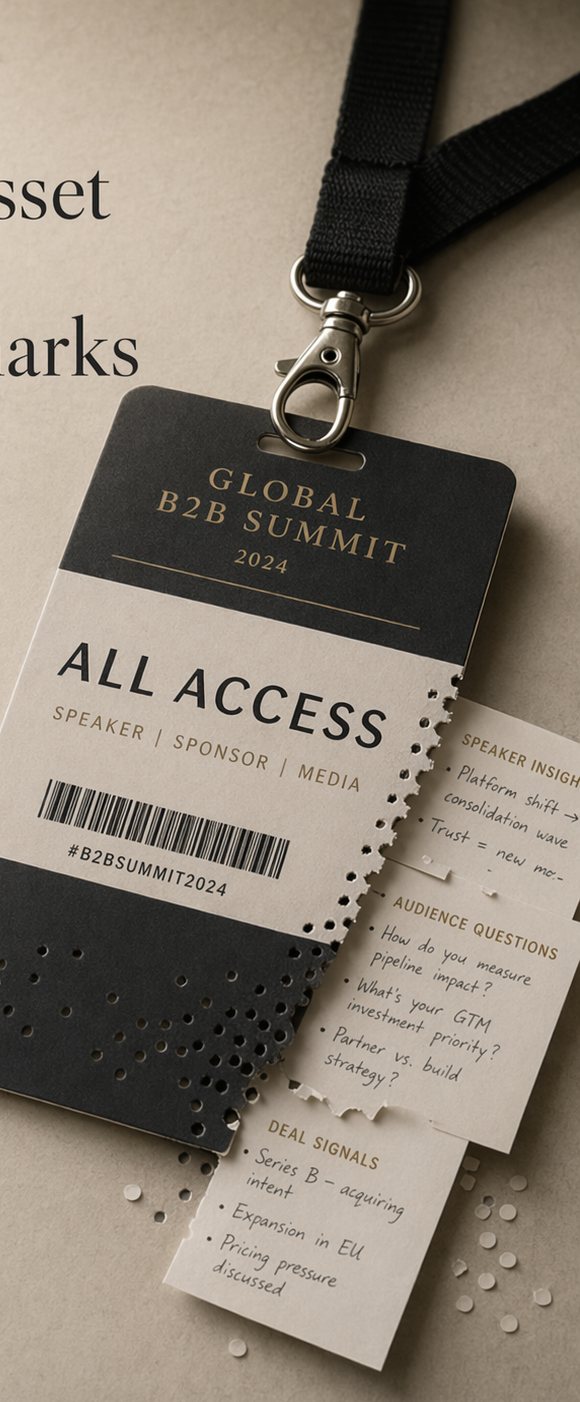
Every sector event the firm runs generates intelligence worth more than the ticket revenue: speaker insights, audience questions, deal patterns, attendance signals. Currently, all of it dies at the closing remarks. Build the capture layer now, so every panel, every Q&A, every hallway conversation becomes structured intelligence that makes your product permanently smarter. The marginal cost of capture is near zero. The marginal product revenue is not.
Continuity: institutionalise the subscriber relationship, so it transfers on architecture, not biography
Every publisher has lost a corporate subscription once, the quarter after the senior analyst who held it moved on. The move is to treat every major subscriber relationship as a small intelligence asset under active construction. Ten years of coverage history. Accumulated sector judgment from every analyst who served it. The subscriber's regulator history, sector priorities, renewal cadence, unwritten rules of the room. The relationship holds on the firm's architecture, not the analyst's biography.
The only firm that joins publishing advisory with working build
The publishing COO has four places to go for help. None can do what we do, and each for a specific reason.
The big consulting firms' media-strategy practices will sell a €400K to €1.5M diagnostic delivered by a partner and analysts billing hours. They produce decks. They cannot put working infrastructure into your newsroom in three months. Their own content-production revenue is what your problem is about.
The CMS and publishing-platform vendors will sell an eighteen-month content-management migration with metadata tagging. They treat your analyst's judgment as a document to file. Every publisher has watched that purchase fail once already.
The AI content-generation vendors will sell a newsroom drafting tool. They are the layer commoditising your mid-career editorial billing. Buying more accelerates the problem it creates.
Your internal IT and the automation platforms will build a chatbot on the intranet or a workflow-automation pilot on expenses. IT optimises for standardisation. It does not sit close enough to how your analysts reason to codify their judgment.
The market offers four things you have already said no to. GRAIL is the fifth option.
- Senior advisory that speaks publishing-floor, not deck
- Working infrastructure your newsroom uses the same week
- Custom agents built on your titles and your sectors
- Intelligence infrastructure your best analysts feed
- No vendor lock-in at any phase of the engagement
- Founded by operators who have run media delivery
- Business first, technology second
- Three weeks from first meeting to working infrastructure
- Your newsroom keeps the infrastructure, you own the IP
- Every next step earned by what just shipped, never assumed
Three sessions with your publishing leadership. Working infrastructure from week one.
We start with your publishing leadership team because the change cannot outrun the team's personal understanding of what is possible. Three workshops. Each delivers standalone value. Each earns the right to the next.
How to think
Walk through what is happening in your sector and inside your publishing engine. Build the first piece of infrastructure in the room: a sector-specific agent for one of your real titles, extracted from the archive you already have. Your operations team leaves with a shared view of what to do next and the first piece of working infrastructure already in their hands.
Your publishing infrastructure
A half-day build. Your Editor-in-Chief, Head of Events, Head of Subscriptions, and Head of Commercial each leave with five to ten pieces of working infrastructure tuned to their function. Editorial drafting. Event-intelligence capture. Subscriber-engagement monitoring. Source-relationship mapping. Intelligence-product structuring. Infrastructure your teams are using the same week, not decks about infrastructure.
Ready to run
Refined infrastructure based on real use. The rollout plan to your wider publishing organisation. The extraction plan for your senior analysts. The pathway plan for your mid-career journalists. And the CEO and CFO conversation with numbers they can check: revenue per analyst, renewal rate by book segment, retention exposure by senior analyst.
Three weeks. No IT project. No board approval needed to start. The infrastructure your publishing engine is already running on when we finish.
For your next operations review
The questions where your operations team cannot agree on an answer are the ones worth an hour on the agenda. Ask these honestly.
Of the last ten subscription renewals that came in below plan, how many lost ground because a subscriber compared your brief to an AI-published alternative your team had not seen? If you do not know, how would you find out?
What percentage of your senior analysts' week is spent on summarisation, format conversion, and cross-publication re-cutting, and what would it take to cut that in half?
If your top three senior analysts left next year, what would happen to the corporate subscribers they carry? What have you actually transferred to the rest of the newsroom in the last twelve months?
Can you point to one thing in your firm that is measurably smarter this quarter than last quarter? If not, what are the next four quarters going to add up to?
Which of your mid-career journalists is already working the way the rest of the newsroom will need to work by 2027? What would it take for that to be the default across your publishing organisation?
If any of these produces a disagreement in your operations team, that is the conversation worth having before the board asks.
Continue reading
Sources and limitations
This briefing draws on GRAIL's engagement experience with leadership teams and on public company disclosures. Figures are illustrative unless a source is named beside them. A sourced edition is in preparation.