
Your Org Chart Is From 1855. Your AI Is From 2025

(I promise this picture will make sense as you continue reading ;)
When your AI-augmented employees become too fast for the company they work in
Most CEOs are asking the wrong question about AI.
They ask: "How do we get people to adopt these tools?"
Wrong question.
Try this instead: "What happens when they do?"
Jonathan Brill said something in our conversation that crystallizes the problem. Companies have been organizing the same way since 1855. That's when the New York and Erie Railroad printed the first org chart.
That architecture assumed three things: people couldn't make executive decisions, lacked context, couldn't model second-order consequences.
AI makes all three assumptions false. Simultaneously.
Nobody's talking about what comes next. You're about to create a layer of supercharged employees who can think faster, decide faster, and execute faster than the organizational systems they're trapped inside. Those systems? Still running on 1850s architecture.

Your best AI pilot right now – someone who's figured out how to actually use Claude or GPT-5 effectively – they're probably 5-10x more capable than six months ago. Comprehensive proposals in minutes. Complex data analysis in seconds. Scenario simulations that used to take days. Their decision quality has gone up too. More context, more variables, actual rigor on second and third-order effects.
And they're hitting friction at every single coordination point.
The Invisible Cage
Look at the pattern. Your augmented employee finishes a strategic analysis by 10 AM that would've taken them until Friday. They're ready to move. But now they need approval from three people still operating at the old pace. Then IT needs two weeks to provision system access. Then Finance only reviews budget requests in the monthly planning meeting.
The problem isn't speed.
It's metabolic mismatch.
Your augmented employee hasn't just gotten faster at execution, they've fundamentally gotten faster at thinking. They can simulate scenarios, stress-test assumptions, explore alternative approaches in the time it used to take them to schedule a meeting. Their context window expanded from "what I personally know" to "what the entire organization knows plus what's knowable."

Meanwhile? Your coordination mechanisms are still designed for information scarcity.
Brill's point about 1850s organizational assumptions isn't historical trivia. Those hierarchies with approval gates and formal review processes? Built explicitly because people couldn't make good decisions, didn't have context, couldn't think through consequences.
That's no longer true.
You're still running the same organizational operating system.
The question isn't whether this creates frustration. It does. The question is what happens when this becomes your dominant pattern.
The Coming Amplification
Most companies are making a catastrophic miscalculation.
They're thinking about AI adoption as a linear capability upgrade. Give people tools. Measure productivity gains. Scale what works. Classic automation thinking: replace inefficient processes with efficient ones, capture the delta, move on.
Augmentation compounds differently than automation.
Right now, we're in Phase 1. Your people have ChatGPT Plus, maybe GitHub Copilot, some custom GPTs. They're operating with 5-10 AI tools that make them individually more capable. Already you're seeing the metabolic mismatch. Frustrating, but manageable.
Phase 2 is already arriving: agentic teams.
One person won't just have 10 AI assistants. They'll manage 5-10 AI teams, each with 5-20 specialized agents working in parallel. An individual contributor will coordinate more moving parts than a mid-sized consulting firm does today.
Every single coordination point will slam into the same 1850s approval processes.
The chokepoints don't scale linearly with capability. They compound exponentially.
Watch what happens to your product manager who currently waits three weeks for design resources. Now they can generate and test 50 design variations overnight. Those three weeks don't just cost time. They cost the entire learning curve the PM went through while iterating. The mental model evolved through dozens of cycles while they waited for a single review meeting.
Or your analyst who can now run comprehensive market simulations in hours. They'll spot opportunities and identify risks at a pace that makes your quarterly planning cycle look like historical reenactment. By the time the planning meeting happens, the market context they're modeling has already shifted. Twice.
The Systems Problem Nobody's Solving
Most companies are treating AI adoption like a training problem. Get people certified on prompt engineering. Set up some use cases. Measure efficiency gains. Run a hackathon.
Wrong again, that’s not the constraint.
Your people can use the tools. The constraint is you're increasing individual metabolic rate without increasing organizational circulatory capacity.
Brill's octopus metaphor gets at this. The octopus survives because its tentacles think independently and coordinate through neural clusters in their "shoulders" - peer-to-peer communication, not central approval. The brain learns what the tentacles discovered, not the other way around.
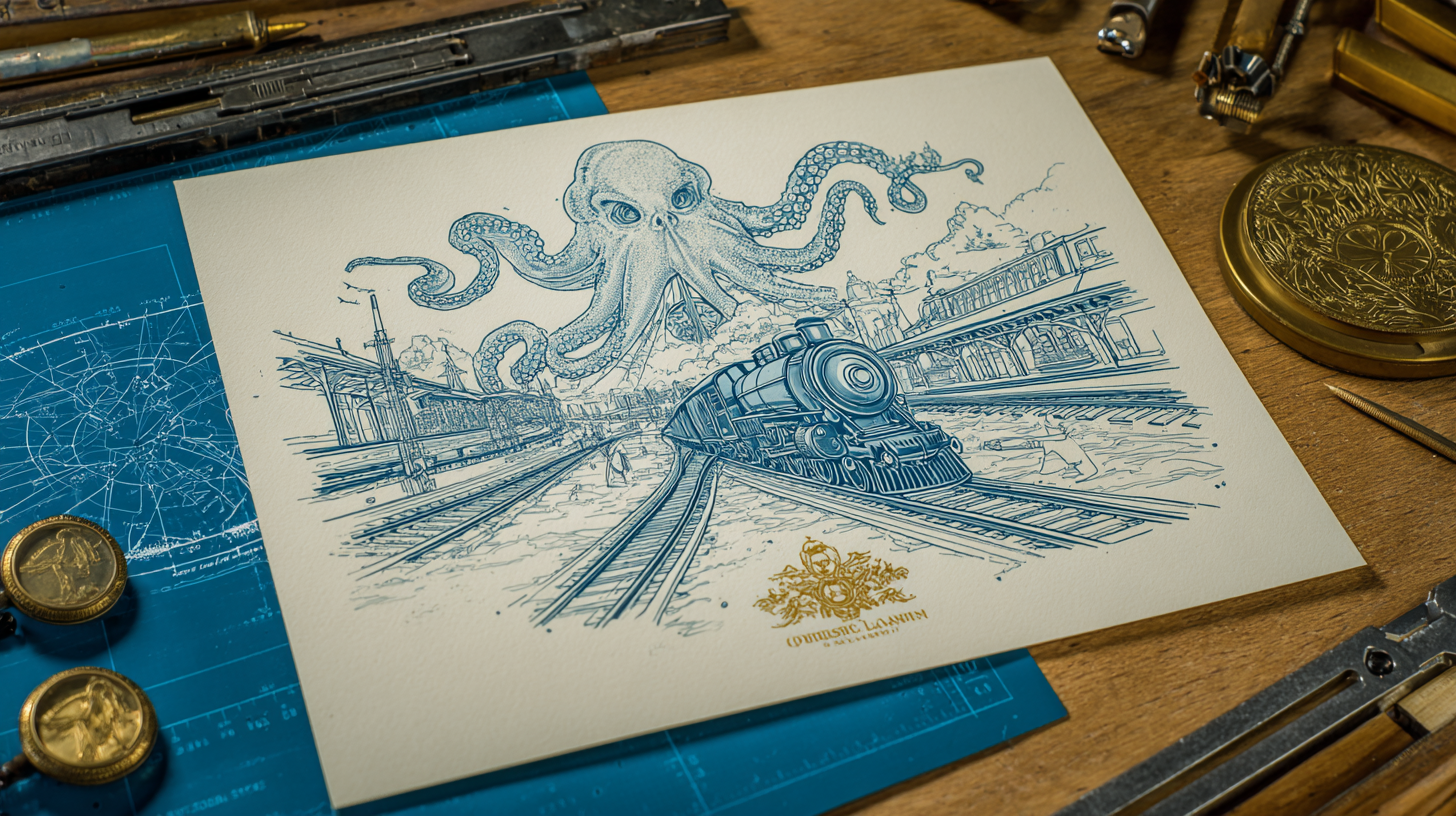
Most companies try the opposite. Maintain central hierarchical control while dramatically increasing cognitive capability at the edges.
It's like trying to run a Formula 1 race with traffic lights every hundred meters.
The transformation you need isn't in your AI capabilities. It's in your coordination architecture.
And look, this is uncomfortable: your current leadership layer probably can't make this transition. Managing augmented employees requires a completely different skill set than managing humans working at human pace. The core competency becomes maintaining strategic coherence without creating bottlenecks.
That's vanishingly rare.
Some of your executives will adapt. Many won't. The ones who can't will become your primary drag on organizational performance.
What This Actually Requires
This isn't about "moving faster." Every CEO already talks about speed.
This is about fundamentally different coordination architecture for a world where individual decision-making capacity multiplied 10x while organizational decision-making capacity stayed flat.
Your approval processes can't be designed for error prevention. When the person making decisions has better context and decision quality than the approver, every approval gate destroys value. The question shifts from "how do we prevent mistakes" to "how do we maintain strategic coherence while people move at 10x velocity?"
Your planning cycles can't operate on quarterly rhythms. When augmented teams identify strategic opportunities weekly, quarterly planning isn't coordination. It's organizational scar tissue. The real question: how do we maintain strategic direction while enabling continuous recalibration?
Your org chart probably needs to look less like a tree and more like a network. Decision authority needs to sit wherever capability and context exist, not wherever hierarchy says it should. This isn't about "empowerment" (you can't empower people who are already more capable than you). This is about redesigning how decisions flow.
Your leadership layer needs to transform or move aside. This one's uncomfortable. But true. The competency required shifts from "making good decisions" to "maintaining strategic coherence while others make decisions at speeds you can't match."
Different talent. Rare. Specific.
Most of your current executives can't do this. Some will adapt. Many won't.
The companies that figure this out first aren't just going to move faster. They're going to operate in a completely different competitive dimension. Augmentation companies competing against automation companies.
After 24 months, the gap becomes unbridgeable.
The Question That Determines Everything
We're spending billions on AI capabilities and almost nothing on the organizational architecture to leverage them.
Everyone sees the old way doesn't work. Nobody's figured out what the new way actually is.
And in that gap, you're creating two classes of employees. The augmented ones moving at 10x speed, and everyone else. The augmented ones are either leaving for companies that can match their pace, or building shadow processes that bypass your coordination systems entirely.
Both outcomes destroy the organization you're trying to build.
The companies that figure this out first – that actually redesign their coordination architecture for augmentation rather than trying to run augmentation through automation systems – they're not just going to move faster.
They're going to compound capabilities year over year while everyone else plateaus after capturing initial efficiency gains.
Watch the timeline.
In 12-18 months, automation companies hit their ceiling. Efficiency captured, process optimized, gains stop compounding.
In 24-36 months, augmentation companies are still accelerating. Capabilities compound. Competitive moats deepen. Gap becomes permanent.
Everyone else will be stuck running Formula 1 cars through city traffic, wondering why velocity isn't translating to outcomes.

The question isn't whether your people can handle AI.
The question is whether you're willing to redesign everything about how your organization actually works to handle your people once they do.
This conversation comes from an excellent podcast with Jonathan Brill, watch it here:
