
The Rooms We've Closed

What leaders hide doesn't disappear. It compounds.
Most of us are being steered by programs we don't even know we're running. Think about it. From a young age, we're taught that ambition is dangerous. That power corrupts. That art isn't a real subject. That we take up too much space. So we build identities around not wanting what we want, around not being who we really are. We become the measured one. The helpful one. Never angry.
And then we scratch our heads, wondering why our organizations default to fear-based decisions. Decisions that look rational on a spreadsheet, sure, but hollow out everything that matters. That's because when we let our shadows control us, we are governed by our past—the subtle forces that risk derailing all of us under pressure.
I'm writing this because what leaders hide doesn't disappear. It compounds.
Especially now, with the largest technological transformation since electricity reshaping every job, we leaders have a deep responsibility to ourselves and our organizations to integrate these shadows. We need to lead through these turbulent times, whole. As Michael Tippett wrote during World War II: "I would know my shadow and my light. So would I at last be whole."
I brought Steven D'Souza on ThinkRoom to discuss his latest book, Shadows at Work. What he shared confirmed exactly what I’d been discovering in my own excavation work over the past three years.
The Palace
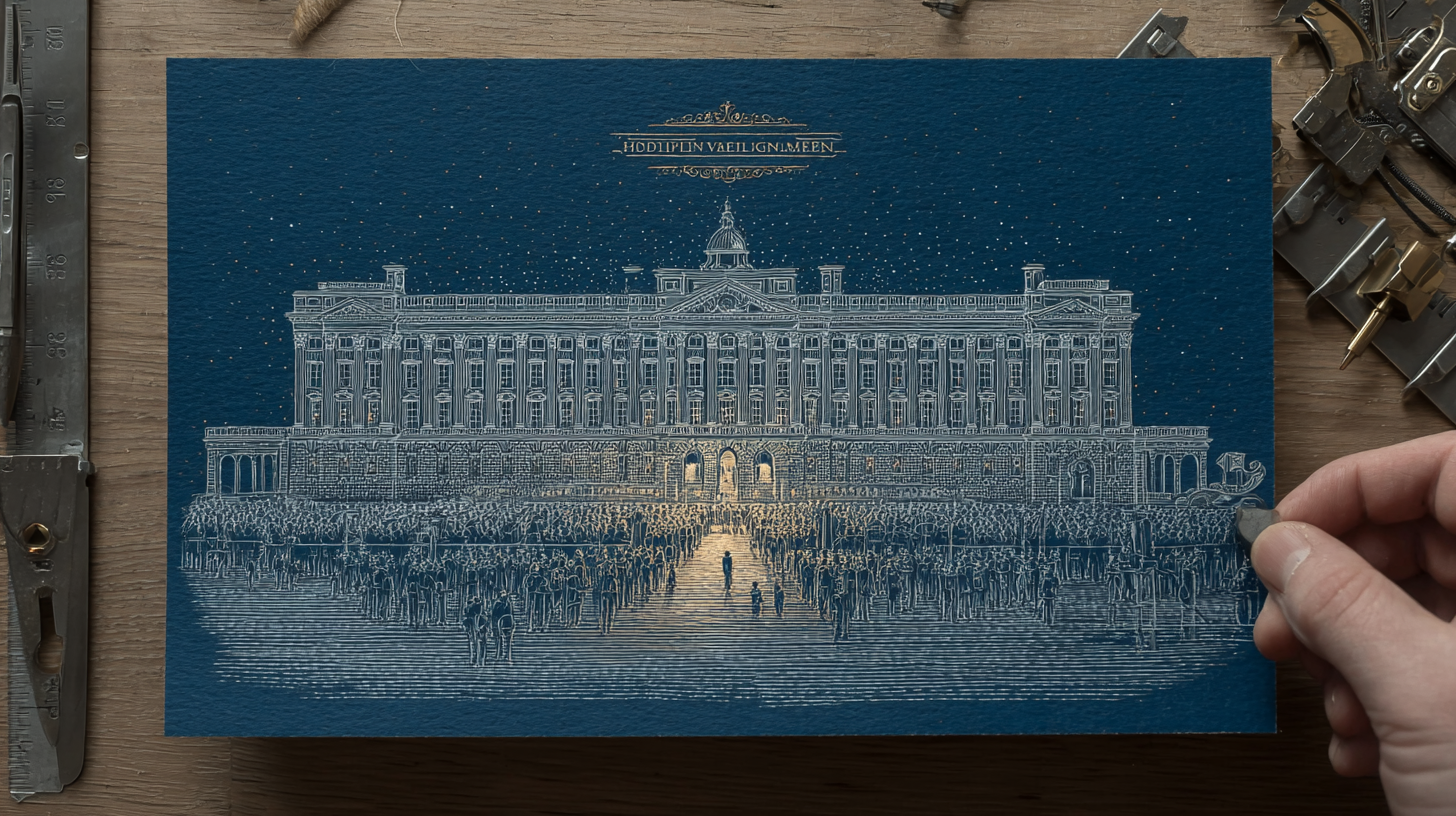
Steven offers a metaphor I loved. We’re born a palace with a hundred rooms. Full capacity. Every emotion accessible. Watch any toddler; they don't filter. Rage, joy, desire, grief. All of it.
Then the messages arrive. Don't be selfish. Calm down. Big boys don't cry. One by one, we close rooms. Until the palace becomes a studio apartment.
The rooms don't disappear. They operate in the dark.
Jung called this the shadow. Not dark as in evil, but dark as in hidden. It’s the repository of everything we learned wasn't safe to express. These aren't character flaws. They’re simply adaptations. Survival strategies that worked once, and now run on autopilot.
The Derailer
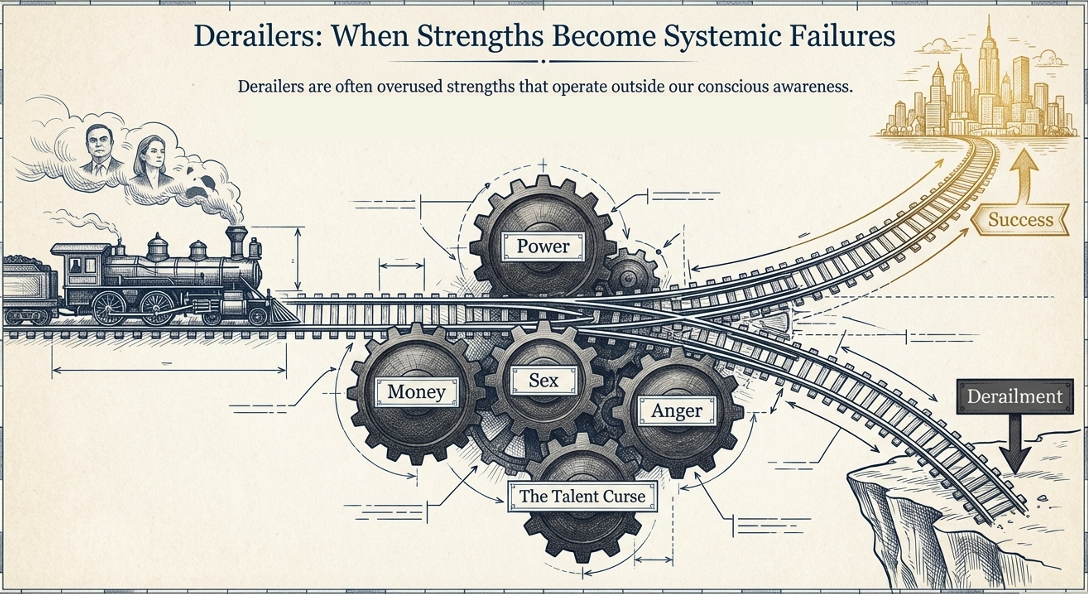
Here’s where this gets strategic. Your shadow isn't some separate, dark self. It's often your light, overextended. Your gift without the circuit breaker.
Decisive becomes impulsive. Attention to detail becomes paralysis. Confidence becomes steamrolling. The very qualities that earned you the role become the qualities that destroy your effectiveness in it.
This is the derailer pattern. Under stress, when the stakes are high, we default to what we know too well. The strength that got us promoted becomes the blind spot that takes us down.
To diagnose your own derailers, look for your disproportionate reactions. When you feel more friction than the situation warrants, something old is operating. Steven traced his own jealousy toward a colleague back to sibling rivalry thirty years earlier. Still shaping how he collaborated and what triggered him in meetings.
50-70% of leaders derail within their first 18 months. Not from lack of skills. But because under new pressure, their strengths distorted into something destructive. Nobody warned them.
Imagine the cost. The teams working around derailed leaders. The talent that leaves. The cultures that learn to work around the leader.
We pretend leaders are rational actors. We're not. We're embodied humans carrying decades of programming, hormonal cycles, and unprocessed grief. Our biology doesn't pause for board meetings. Our childhood wounds don't wait outside the conference room.
The Organizational Cost
Scale this up and you get collective shadow. The "we that we don't see."
Take Boeing. 346 lives lost. The shadow wasn't invisible; it was denied. Whistleblowers raised alarms. Engineers flagged concerns. The company blamed pilots, then software, then individuals. What they couldn't do was examine the culture they had built and the incentive architecture that prioritized speed and cost over safety. The rooms they had collectively closed.
Theranos. Wells Fargo. Uber. The pattern repeats. Organizations create systems that make ethical behavior locally irrational, then act surprised. They scapegoat individuals rather than examining the collective shadow.
The cost of not doing shadow work compounds into culture. Culture compounds into decisions. Decisions compound into catastrophe.

And now, consider the transformation we're living through. Entire job categories being redesigned in real time. Fear of obsolescence runs through every corridor. Your teams are already carrying more stress than they can name - and stress is precisely when shadows take the wheel.
When leaders haven't done this work, fear disguises itself as prudence. Short-term thinking masquerades as pragmatism. The pressure to cut costs activates every unexamined derailer in the building. Organizations make choices from collective anxiety rather than strategic clarity and those choices compound for decades.
Shadow work isn't self-help. It’s leadership responsibility. We owe it to ourselves and our organizations to do this integration - not just to avoid derailment, but to unlock what’s been locked away.
The Golden Shadow
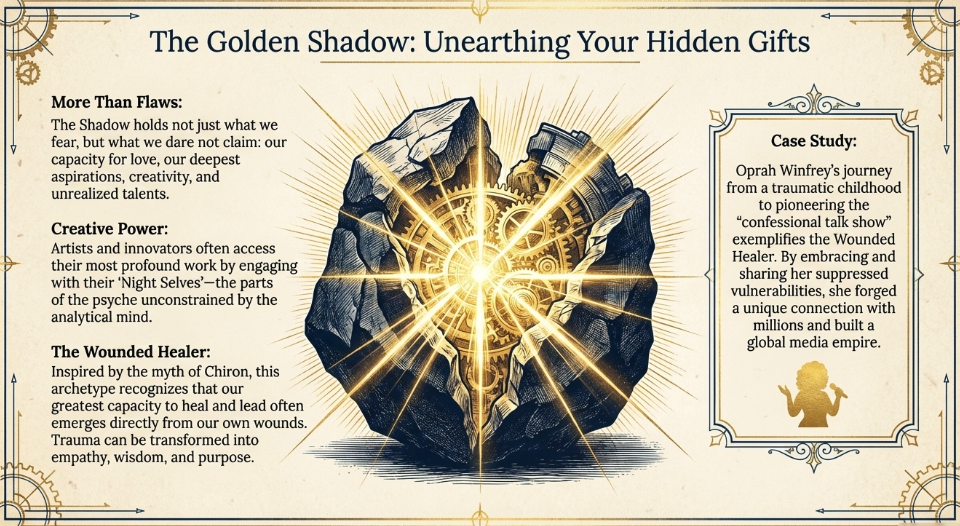
Here's what makes this work strategic: your shadows are not just liabilities. They are often your greatest unrealized assets.
Jung called this the golden shadow: the gifts we learned to hide. The hunger suppressed because ambition looked dangerous. The creative drive dismissed because it seemed impractical.
If the derailer is your strength, corrupted, the golden shadow is your strength, locked away. Reclaiming it turns caution into contribution.
Let me give you a quick example from my own life. This excavation work over the last year has been fascinating. Bear with me; the pieces will fall into place.
I was always profoundly drawn to people with interesting minds: leaders, thinkers, people shaping things that matter. But I’d learned to deeply distrust this impulse. Power corrupts, right? Was I just trying to be a hanger-on? Was this attraction something to be ashamed of?
So I chose to ignore it. I built an entire identity around being the helpful one, the measured one. Never too ambitious.
But that core desire didn't disappear. It went underground. And from the dark, it began to leak out sideways: as low-grade resentment, as workaholism, as a vague sense that I was playing smaller than I was built for, and yes, even, at times, belittling others' accomplishments.
When I finally looked at the impulse directly, everything shifted.
What if I just loved their minds because it lights me up? What if it's an honest signal that calls me forward? What if I treated this intense attraction as my golden shadow and engineered a life where every ounce of energy flowed towards what lights me up?
The new principle became: Passion picks the projects. I would build only with exceptional humans. Every 'yes' born from excitement. Every 'no' protecting that excitement.
This used to feel profoundly selfish. Now, I actively build GRAIL around this very principle.
The result isn't self-indulgence - it's higher impact. I get to serve clients from passion, not obligation. Surrounding myself with the right people gives me the leverage to help leaders make human-centric, strategically sound choices for the long term.
A core desire I was ashamed of turned out to be the engine for my greatest contribution.
This is the real promise of shadow work. Not just ensuring our demons don't run us, but reclaiming the full palace and unlocking our human potential we’ve kept behind closed doors. In ourselves. In our teams. In our organizations.
The Integration
The things I was afraid to look at turned out to be the things that might be my greatest gift to give.
This isn't just about professional pursuits, by the way. It affects my marriage, my parenthood, my friendships. I give myself permission to be whole. To actively work on integrating my full self - the light and the dark.
As leaders, we have a responsibility to not be derailed. The statistics are a wake-up call: 50-70% of leaders failing within 18 months. The cost of unexamined shadows isn't just personal- It's systemic.
The rooms don't reopen themselves. That's the work. Deliberate. Uncomfortable. Often requiring guides who’ve done their own excavation.
But the palace is absolutely worth reclaiming. Not because every room is pleasant (some are terrifying, frankly). But because wholeness turns out to be the foundation for both effectiveness and aliveness.
"I would know my shadow and my light. So would I at last be whole."

