Contents · 6 min read
01 / 05 · Board concern
Is your AI program failing?
In short
You are spending more on AI while output stays flat or falls. Your board is right to ask whether the program is working.
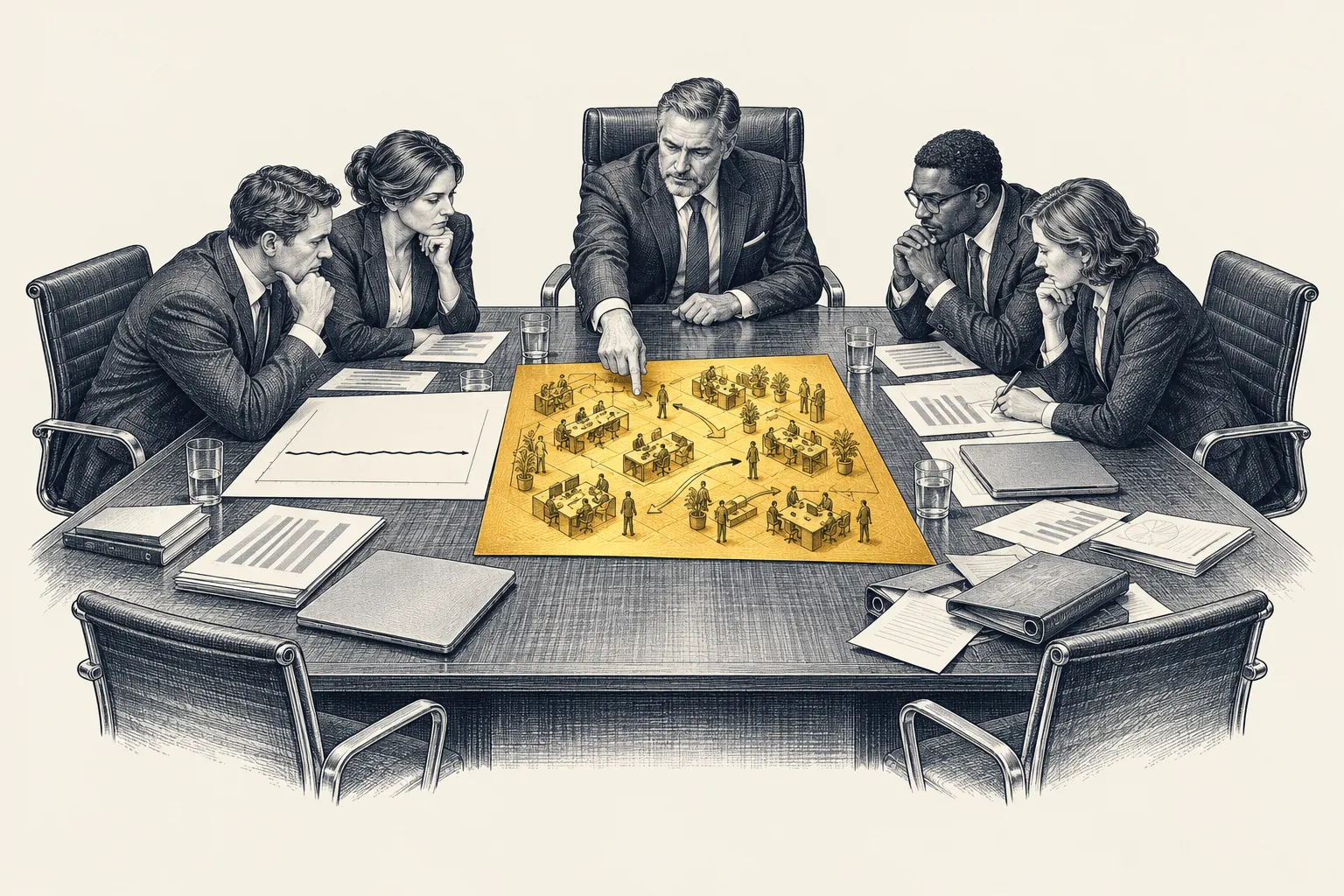
You enter a board meeting with AI spend rising while productivity is flat or falling. The quarter still demands hard questions, but margin alone cannot show whether your teams are rebuilding jobs or simply adding AI to the old work.
Margin still matters because your company cannot fund change without end. A weak quarter should prompt hard questions about what the work has produced.
But margin does not show whether teams are redesigning jobs or leaving the old work in place.
AI strategy for boards explains why the timing matters. When your company changes how work gets done, the cost comes before the full gain.
A clean early return can feel safer because it is easy to show. Yet it may only mean your team has made one task cheaper.
It needs to know what your teams are changing in the work itself.
02 / 05 · Redesign
Why does redesign hurt results first?
In short
Results can fall when your teams redesign jobs around what AI now lets them do. People must learn the new work before it starts to pay.
Your people know how to run the work they do today. When jobs change, that skill does not pass at once to the new way.
Your team must learn which work AI can do well. It must also learn where people still need to judge the result.
Your teams have to test that division of work before they can rely on it.
Those costs are real, and your board should see them. How to build an AI strategy shows why deep change can look weak before it pays.
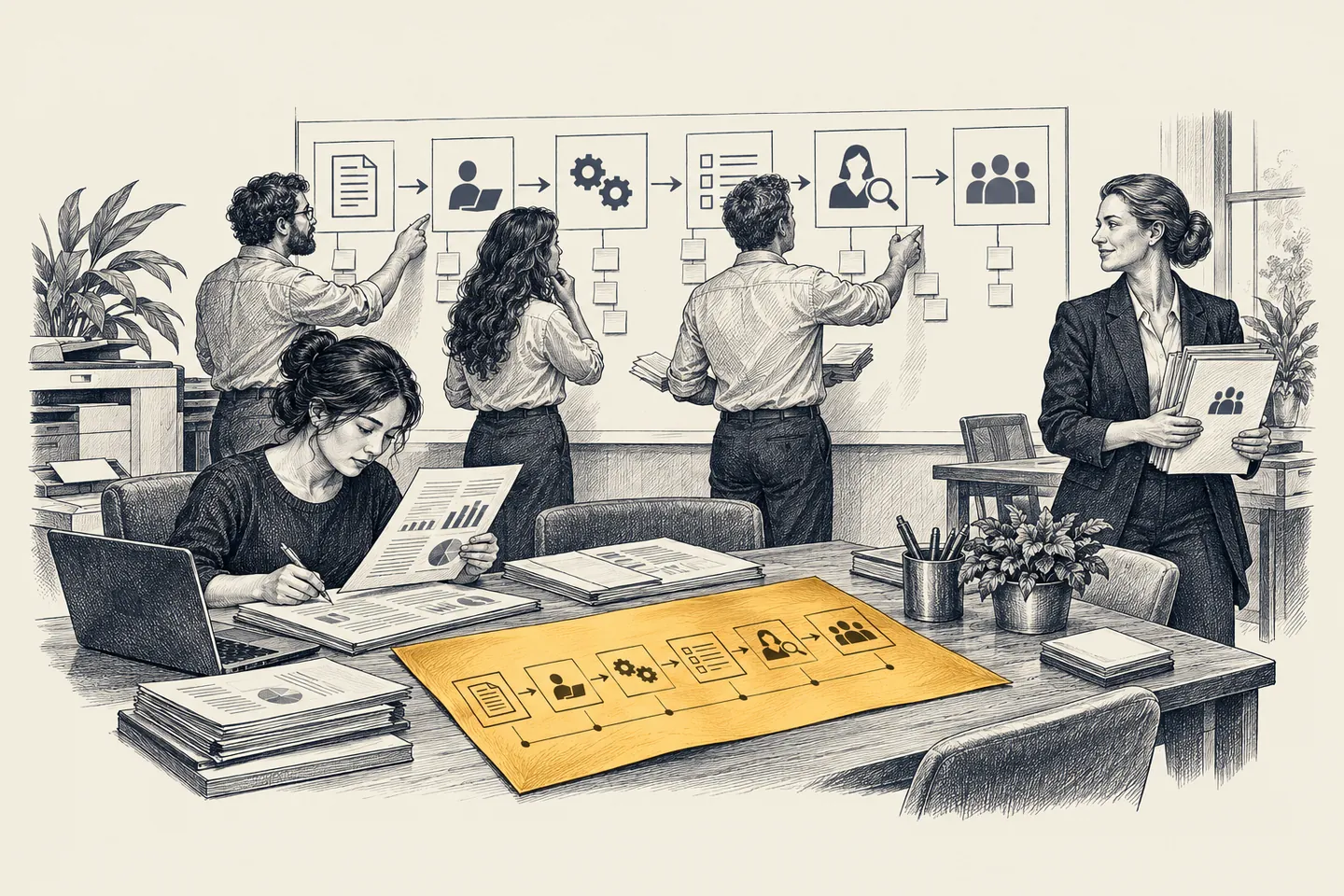
AI pasted onto the old workflow can show clean early cost gains. That can help, but it does not show that your company has changed the job.
Redesigned work asks what people should stop doing and what they can now do instead. AI transformation differs from digital transformation because AI changes judgment and decisions.
Yet strain alone proves nothing, so your team needs a clear test.
03 / 05 · The test
Which dip is healthy?
In short
The dip is healthy only while your teams learn faster and can do useful new work. If the same work stays in pilot form, the program is stuck.
Do not judge the dip by how hard people are working. Judge it by what your company learns and can now do.
Run this test with the leader who owns each part of the program.
Learning speeds up
For this program, compare how long the team takes to apply what it learned in the job from one review to the next.
New work becomes possible
Ask what the team can do now that it could not do last month.
Jobs begin to change
People stop some old tasks because the new way has proved useful.
The work spreads
The new way moves beyond the first pilot and into regular work with a named leader accountable for the result.
You’re Reading the Wrong Curve sets out the same divide. Progress means repeated tests lead to changes in how real jobs are done. Failure stays in pilot form or adds AI while the old work stays in place.
The test does not ask your board to ignore poor results. It shows whether those results are buying useful learning and new work.
If none of the four signs moves, do not call the dip healthy. The work must change course or stop.
Once your team can tell learning from delay, the board needs to see the same proof.
04 / 05 · Board view
What should the board see during the dip?
In short
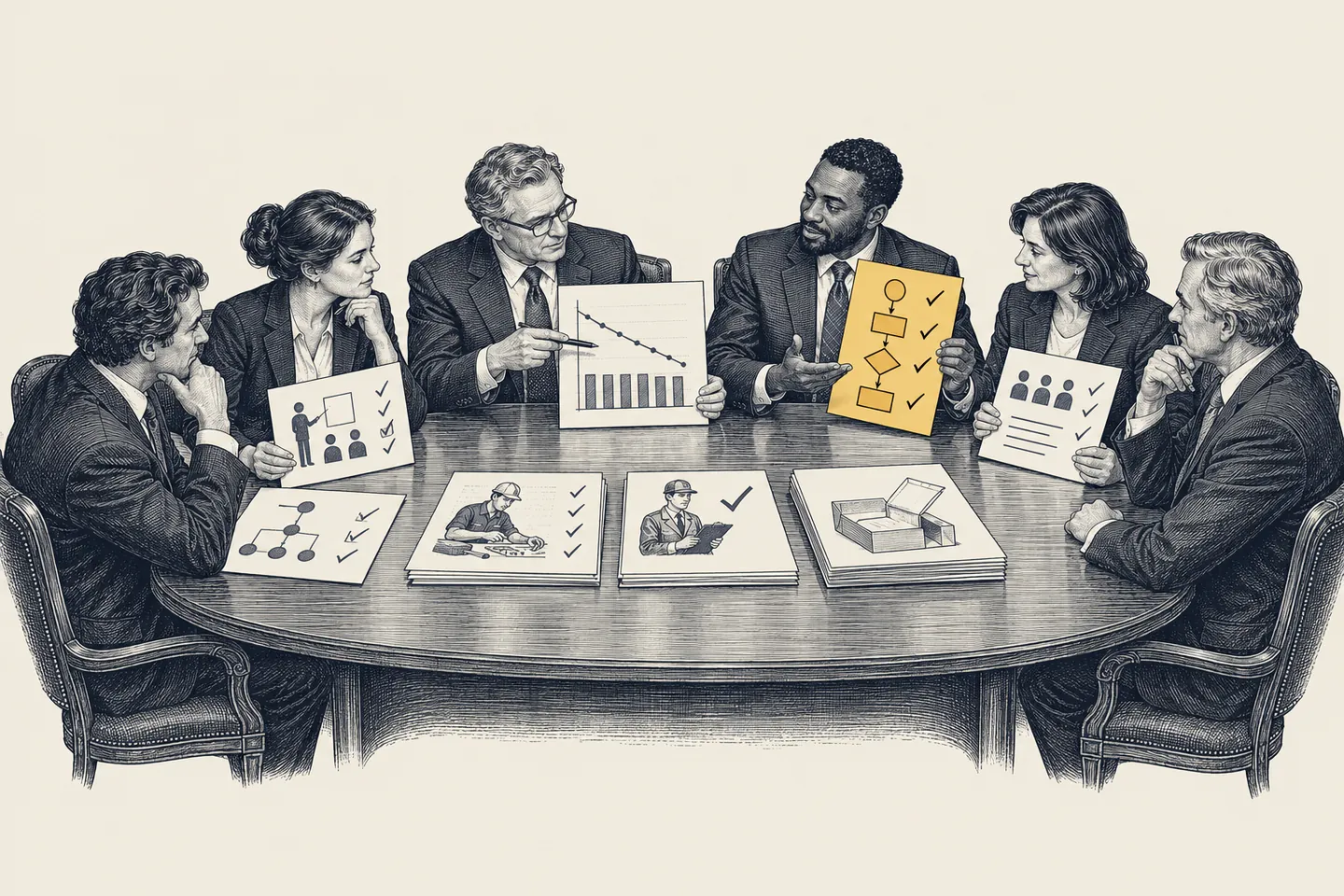
Show the board margin and output, but add learning speed and new work. Directors can then see the reported results and whether teams are learning faster or can do new work.
Keep the usual company measures because they show the cost of the dip. Then place the test beside them, so directors can see what the spend has built.
Use four lines in each board report:
Have the owner show what changed
Name the job that now works in a new way.
Have the team show what changed and how quickly it was adopted
State what the team learned since the last review and how quickly it applied the change in regular work.
Have the owner show the new work
Name what the team can now do that it could not do before.
Have finance show the result
Put the effect on output and margin beside the change in the work.
The Margin That Blinds You shows why the case for guarding current profit often looks cleaner. A focus on this quarter’s margin can make job redesign look too costly to fund before it pays.
Do not drop margin from the report. Put it beside the signs that show whether jobs are changing and new work is now possible.
The board should expect strain while jobs change. It should also expect proof that the strain is leading somewhere.
05 / 05 · Funding gate
How long should you keep funding it?
In short
There is no set number of quarters that makes a dip healthy. Keep funding the work only while each step earns the next one.
Patience matters because stopping at the first weak result can waste the work already done. Yet patience cannot become a promise to keep spending until the numbers turn.
Set the next funding choice before each step starts.
Have management name the next change
State which job your company will work on.
Have the owner name the proof
State what the team must learn or do by the end.
Have the owner show the result
Explain what changed and what the team can now do.
Have management choose again
Fund the next step only when the owner shows that the team learned what it set out to learn or can now do the useful work named at the start.
This makes the stop-or-continue decision explicit at each review.
Your leadership team should own these choices because AI work starts with leaders who can see what is possible. Your IT or AI delivery team can run tests, but your leadership team must set the path for the company.
Set the board’s test
Your next task is to give the board a clear test for whether weak short-term performance is buying faster learning and useful new work, then tie each new round of funding to what the last step proved. GRAIL’s two-page board memo gives you a structure to put that choice in front of directors at the next meeting. Copy it, then adapt the measures and funding gate to the work your company is changing.
A two-page memo for your next board meeting, laid out on the page, ready to copy. No sign-up.
Questions CEOs ask about this
Why can AI transformation hurt performance before it improves it?
A good AI transformation can look worse before it looks better because teams must learn redesigned jobs before the new work pays. You must decide whether flat or falling output is buying faster learning and useful new work, because stopping too soon can waste work already done, while funding a stalled pilot keeps costs rising. The stake is whether each step earns the next round of funding.
What creates the initial productivity dip?
Your people must learn a new way to work before it pays. The dip comes from redesigning jobs around what AI now lets them do.
How long should leaders tolerate worse short-term performance?
There is no standard number of quarters. Review each step, then continue only when it shows useful learning or new work.
Which signs distinguish a healthy dip from a failing program?
The team takes less time to apply what it learns, and real jobs begin to change. A failing program stays in pilot form or leaves the old work in place.
How should targets and incentives change during the transition?
Keep margin in view, but do not judge leaders only on the current quarter. Add learning speed and the useful work your company can now do.
How can the company protect customers while workflows change?
Keep people responsible for judging results while the workflow changes. Move the new way into regular work only after it has proved useful.

Founder, GRAIL
Johan has spent fifteen years in management consulting and executive leadership, including as Chief Product Officer of a SaaS company. He founded GRAIL to help European leadership teams work out what AI changes at the core of their business. He is the author of The Execution Revolution and the host of the ThinkRoom podcast.
Related reading
Sources
- AI for Leadership Teams: why deep change can cause a dip and what leaders should track. (accessed October 29, 2026)
- AI Strategy for Boards: why margin alone can lead a board to stop useful change too soon. (accessed October 29, 2026)
- How to Build an AI Strategy: why early clean returns can point to small gains rather than deep change. (accessed October 29, 2026)
- You’re Reading the Wrong Curve: the signs that divide jobs being rebuilt from pilots that stay stuck. (accessed October 29, 2026)
- The Margin That Blinds You: how short-term margin goals can favor the work your company already knows. (accessed October 29, 2026)
- AI Transformation vs Digital Transformation: why AI changes judgment and must start with the leadership team. (accessed October 29, 2026)
Next scheduled review: February 1, 2027