Contents · 7 min read
01 / 05 · The line
What does your board need beyond pilot counts?
In short
Pilot counts show that work has started, but they do not show which work matters. Your board needs a clear line between the choices it owns and the work management runs.
In your next board meeting, a meeting note tool may appear beside work that could change what your customers buy. Both add one to the pilot count, so your directors see activity but not which choice matters to the company.
An AI board memo should show the change management sees in the market. It should also show where your company stands and sort current work as Scale, Test again or Stop.
That gives directors a view of the choices behind the activity. It also stops a list of tools from taking the place of a business position.
Management runs each pilot, while the board governs the choices that could change the company. That line starts with what only the board should decide.
02 / 05 · Board role
What should the board decide?
In short
The board owns the company’s direction for AI and its risk limit, not each tool or project.
Management should prepare its view of what is changing and how the company should respond. The board then tests that view because the choice will guide where the company puts its funds and builds skill.
As AI strategy for boards explains, the board must decide which business change it is backing. It should make management state the change clearly and back the skill needed to act.
Directors may want details because the choices can affect real work and risk. That concern is sound, but it does not mean the board should choose each tool or run each project.
The board should instead set the risk limit for the company. Management can then act within that limit and return when a new choice may cross it.
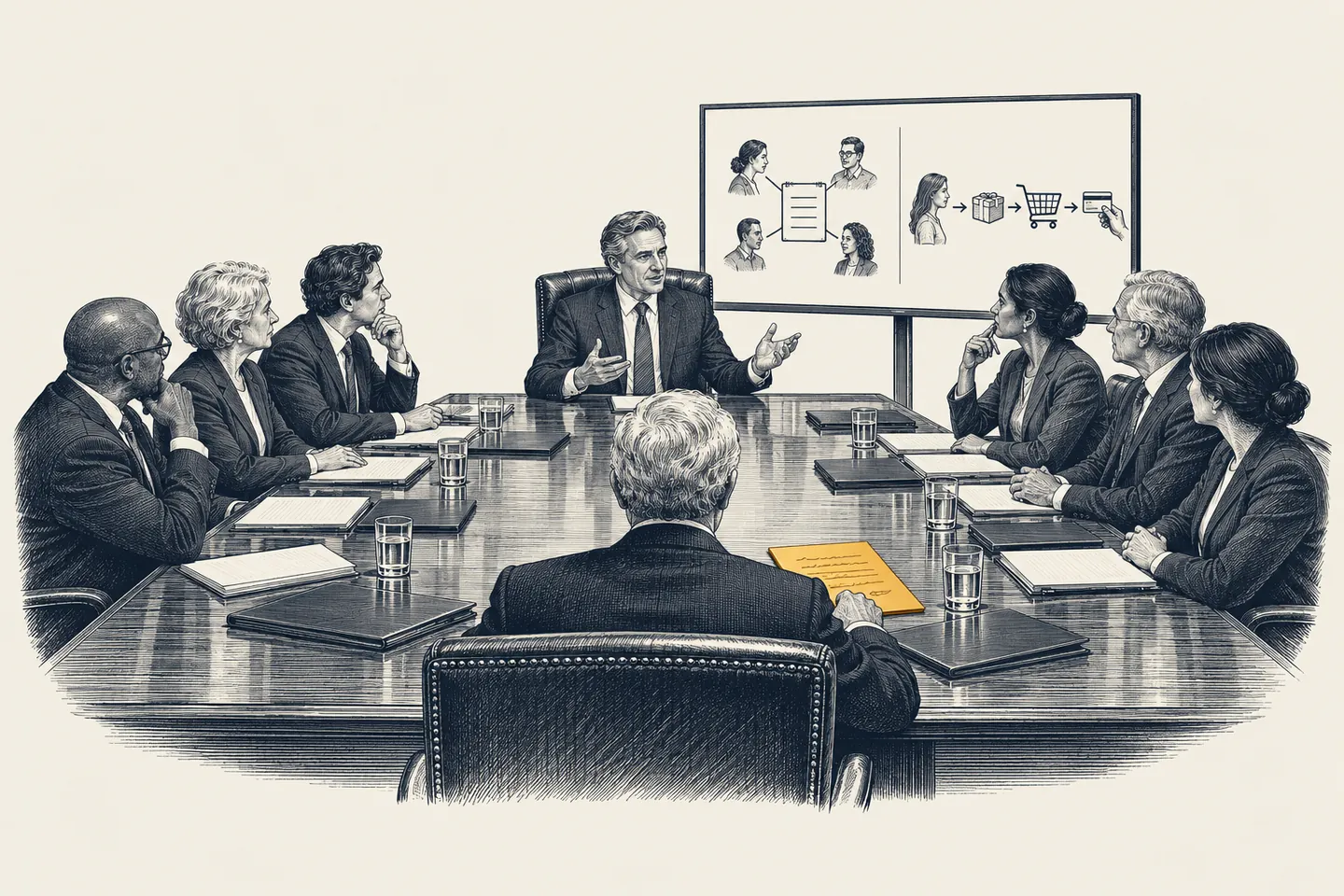
This keeps the board focused on choices that could change the company’s position. Once directors set that line, your management team must choose where to act within it.
03 / 05 · Management role
What should the CEO and management own?
In short
The CEO and management team choose the AI investments within the board’s agreed position. They name the owners and answer for the business results.
Your management team already chooses investments and assigns company funds. AI does not remove that duty because a tech team or outside firm may build the tool.
Each investment should support the business change the board has backed. Management must state its expected result. One executive must own that result and the process change.
That owner matters because a working pilot can still leave your company unchanged. AI pilots fail to scale when no executive owns the result or key trust choices stay vague.
The owner should track what the work changes and bring the evidence back to management. The team can then decide whether to Scale, Test again or Stop.

AI can help keep the facts and past choices current, but the choices stay with your leaders. The CEO also owns the board message, while the right executives check each material claim.
Management should be free to act within the agreed line. It also needs a clear rule for when a choice must go back.
04 / 05 · Escalation
When does a decision return to the board?
In short
Management brings back an exception, not every investment. The trigger is a change in direction or a breach of the board’s risk limit. No spending threshold fits every choice.
| Decision type | Responsible role | Evidence required | When it goes to the board |
|---|---|---|---|
| Business change and risk limit | Board, on management’s proposal | Market change, company position and open risks | The proposed direction or risk limit changes |
| AI portfolio and investment choice | CEO and management team | Expected business result, named owner and current evidence | The investment may change the agreed direction or exceed the risk limit |
| Delivery and business result | Named executive owner | Progress, result and recovery action | The result or failure could exceed the board’s risk limit |
| Incident or increase in risk | Crisis lead and management | Confirmed facts, current effect and the choice required | The effect may exceed the board’s risk limit |
Your normal approval rules still apply, so a large investment may already require board approval. That is useful, but cost alone does not show the full weight of an AI choice.
A smaller investment may change what customers buy or how key work is judged. A larger investment may stay within a path the board has already approved.
Use three questions when the route is not clear.
Direction
Could this choice change what the board agreed AI should do for your business?
Risk
Could it create more risk than the board agreed the company would accept?
Board choice
Does management need directors to approve a new position before work can continue?
If any answer is yes, take the choice back with checked facts and a clear request. A useful board memo ends with the open risks and the decisions directors owe.
The same rule applies to an incident. The crisis lead confirms the facts and chooses the response. But directors must see an issue that may move the agreed line.
Management can propose the risk limit, but the board must set it. The return route must then be set before the work begins.
05 / 05 · Decision rights
How do you stop governance from slowing the work?
In short
Put the owner and the return trigger into every AI decision before work starts. Management can then act within a clear line, while the board sees the choices it must make.
A committee can check evidence and give advice. That work can help, but the committee should not become the owner of the business result.
Drift begins when several groups can review a choice but no one must make it. The work then waits because each group expects another one to decide.
Use this sequence to set or revisit the line. Then let management run the work within it:
Have management state the change
Show how the proposed AI investments support the business change.
Have management propose the risk limit
State which choices it expects to make without another board decision.
Have the board set the direction and risk limit
Directors approve the line, not each investment within it.
Have the CEO name the owner
For each investment, name one executive to own the result and the process change. That owner sets the proof and return trigger.
Have management make the next call
Use the evidence to decide whether to Scale, Test again or Stop. Return to the board only when the direction or risk limit may change.
The board can still ask hard questions because the evidence and return trigger are clear. Management can move without seeking director approval for each operating choice.
This division also keeps specialist groups in their proper role. They can test the evidence and flag risks, while the named leader answers for the result.
The next board decision
Your next task is to put the board’s agreed AI direction and risk limit on paper, then show each management choice with a named owner and a clear trigger for returning to directors. GRAIL’s two-page AI board memo gives you a page to copy for the meeting, so you can state the company position before asking directors for the choices only they can make. It is laid out on the page and ready to use without signing up.
A two-page memo for your next board meeting, laid out on the page, ready to copy. No sign-up.
Questions CEOs ask about this
Which AI decisions should the board make, and which should stay with the CEO and management team?
The board should decide what AI must change in your business and how much risk the company will accept, while management chooses each investment and answers for its result. When your next board pack lists several pilots, the count will not tell directors which one could change what customers buy. The decision now is where to draw the line so management can act without returning every choice to directors.
Who sets the company’s AI risk limit?
Management proposes the limit. The board sets it, and management returns only if a choice could exceed it.
Who chooses and owns the strategic AI investments?
The CEO and management team choose the investments within the agreed direction. Each investment needs one executive owner who answers for its business result.
Which investments require board approval?
Apply your normal approval rules, then test the investment against the agreed direction and risk limit. No universal spending limit fits every company, so bring back any choice that may change either one.
When should management escalate an AI incident or increase in risk?
The crisis lead should first confirm the facts and assess the effect. Escalate when the issue could change the company’s AI direction or exceed the board’s risk limit.
How do we prevent governance from turning into committee drift?
Give each choice one named decision-maker before the work begins. A committee may check the evidence, but the board or named leader must own the decision and its result.

Founder, GRAIL
Johan has spent fifteen years in management consulting and executive leadership, including as Chief Product Officer of a SaaS company. He founded GRAIL to help European leadership teams work out what AI changes at the core of their business. He is the author of The Execution Revolution and the host of the ThinkRoom podcast.
Related reading
Sources
- AI strategy for boards: why the board must decide which business change it is backing. (accessed October 29, 2026)
- AI board memo template: how to show the market change, current work and open board choices. (accessed October 29, 2026)
- AI-augmented management team: how current facts can support leaders while choices stay with them. (accessed October 29, 2026)
- Why AI pilots don’t scale: why each investment needs an executive owner and clear trust choices. (accessed October 29, 2026)
Next scheduled review: February 12, 2027