Contents · 6 min read
01 / 05 · The starting point
Start with the choice in front of you
In short
A CEO should first use AI on a live choice, not on faster drafts. For a biotech research company, the need is to bring facts into one view before people use judgment.
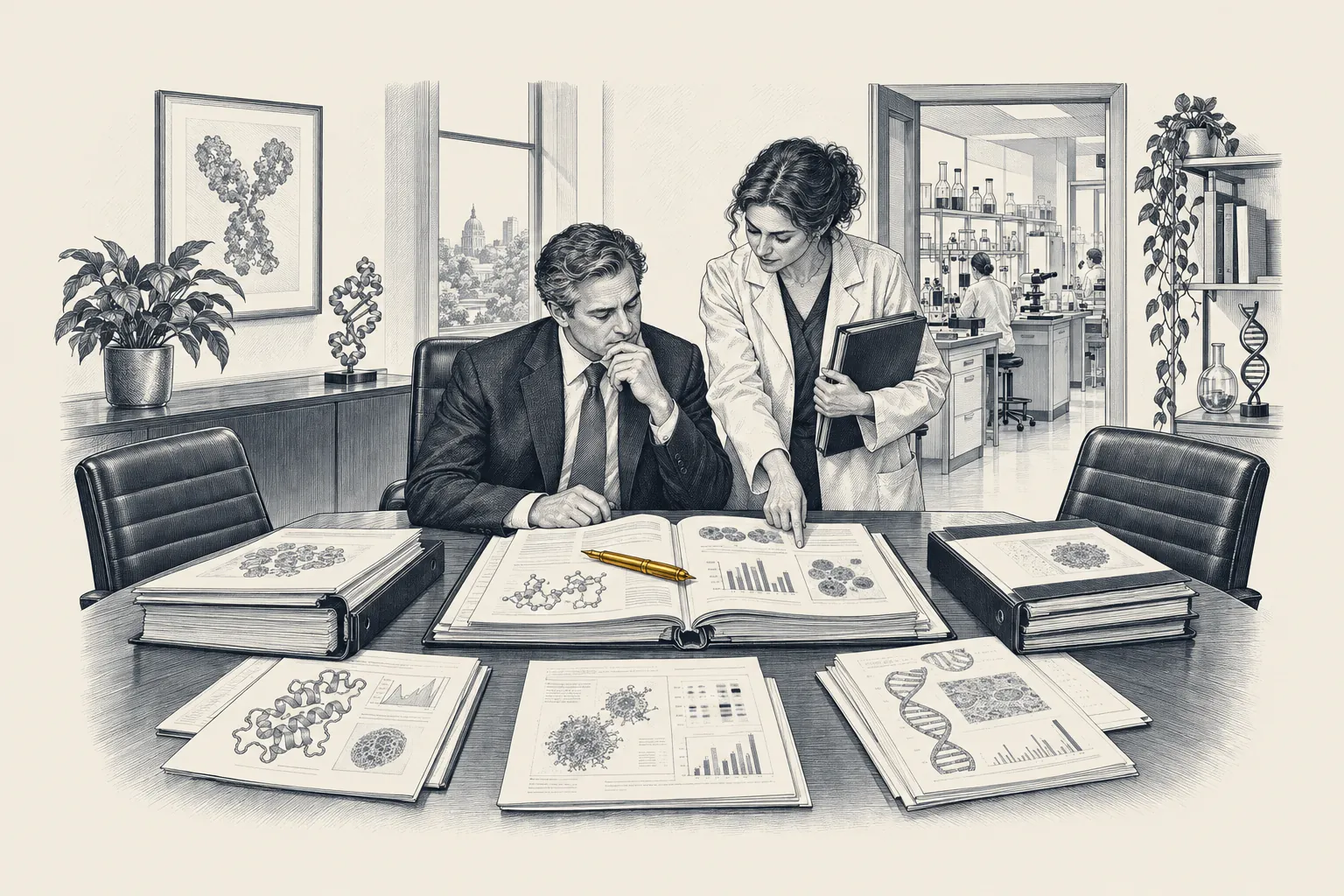
A biotech research company is preparing for its next board meeting. Its program history sits across files and in people’s heads. The CEO must bring that record together before the team can judge the choice.
For the biotech research company, the CEO often has to join those parts by hand. The team brings reports from each function. The CEO must work out what they mean together.
Using AI to write an email faster can still help. For the biotech research company, that is a real time saving. But it does not give the CEO a better view of a hard choice.
The first use should build that view from the evidence.
02 / 05 · The evidence
What should AI assemble?
In short
Ask AI to prepare the facts behind the choice. For the biotech research company, this frees the CEO to weigh the facts instead of hunting through documents.
For the biotech research company, ask AI to pull the relevant literature. Ask it to check the competitive pipeline. Ask it to find regulatory precedent. These are preparation tasks around scientific judgment, not a replacement for it.
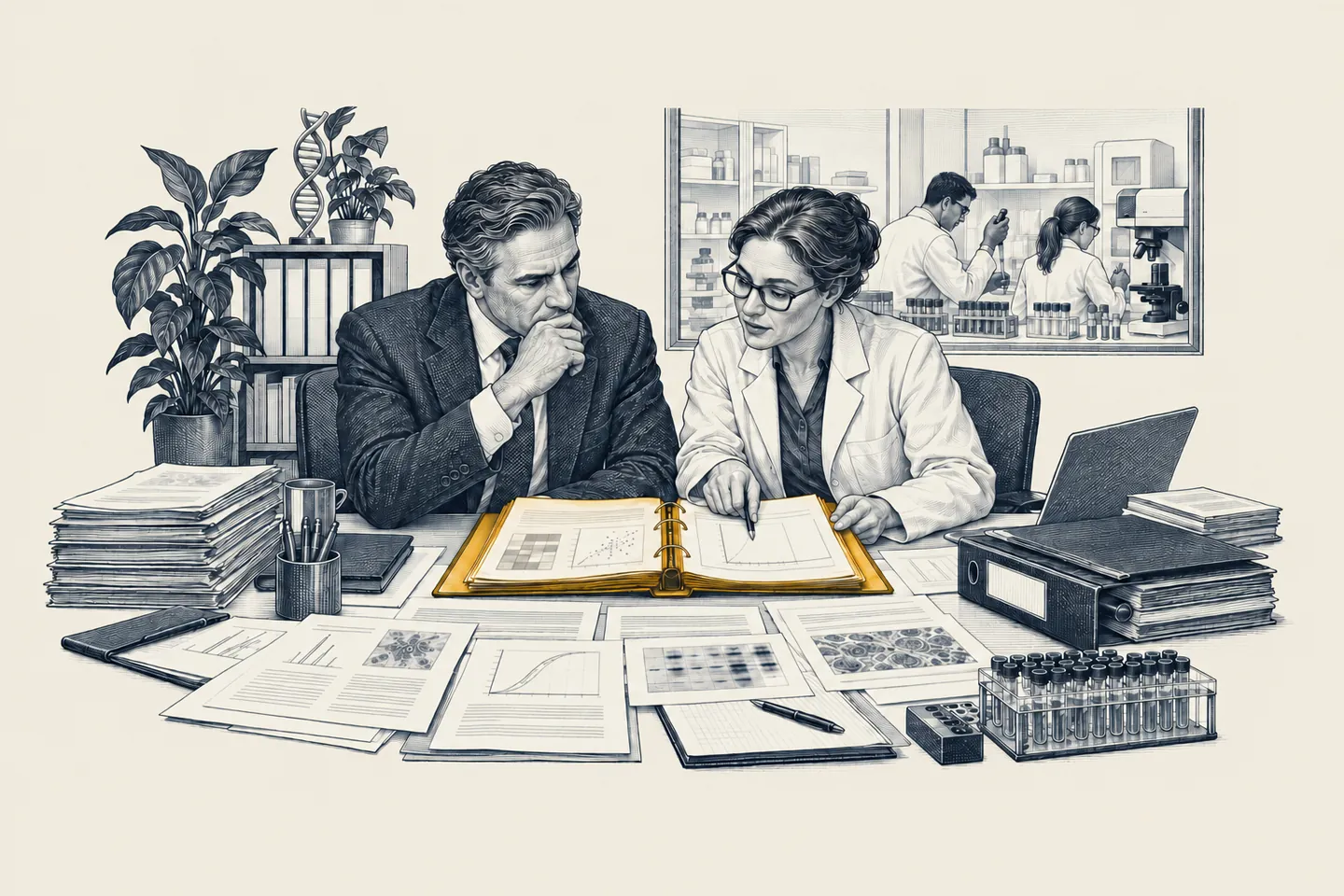
For the biotech research company, put the resulting evidence in one shared record. Let AI flag a missing update. Let it ask for more evidence when a claim lacks support. The management team can then begin from a current picture instead of separate reports.
This is where an AI-augmented management team starts to change the meeting. The CEO has more room to integrate judgment. The team has less need to reconstruct the company from scratch.
A good record also gives AI enough material to argue back.
03 / 05 · The challenge
What would prove your plan wrong?
In short
Ask AI to build the opposing case before people gather in the room. For the biotech research company, this can expose weak assumptions while there is still time to change the plan.
For the biotech research company, give AI the evidence behind the choice. Ask it to state the strongest case against it. Ask it to find the weak points in the proposed story.
Ask it to take a skeptical internal view. Then ask it to take a competitive view. If the choice affects a customer or partner, ask it to take that view too. Use the harshest critics you can name.
A CEO who uses AI only to write faster gets a cleaner first draft. That is useful. For the biotech research company, it does not test whether the choice still holds when someone pushes back.
The opposing case gives the board meeting a better starting point.
04 / 05 · The board
Which questions will the board ask?
In short
Use AI to prepare the hard questions before the board asks them. For the biotech research company, the board pre-read should show the opposing case and the weak points in the story.
For the biotech research company, ask AI to turn the evidence and challenge into a board pre-read. It can prepare the hard questions. It can show where the board may see a risk the team has grown used to.
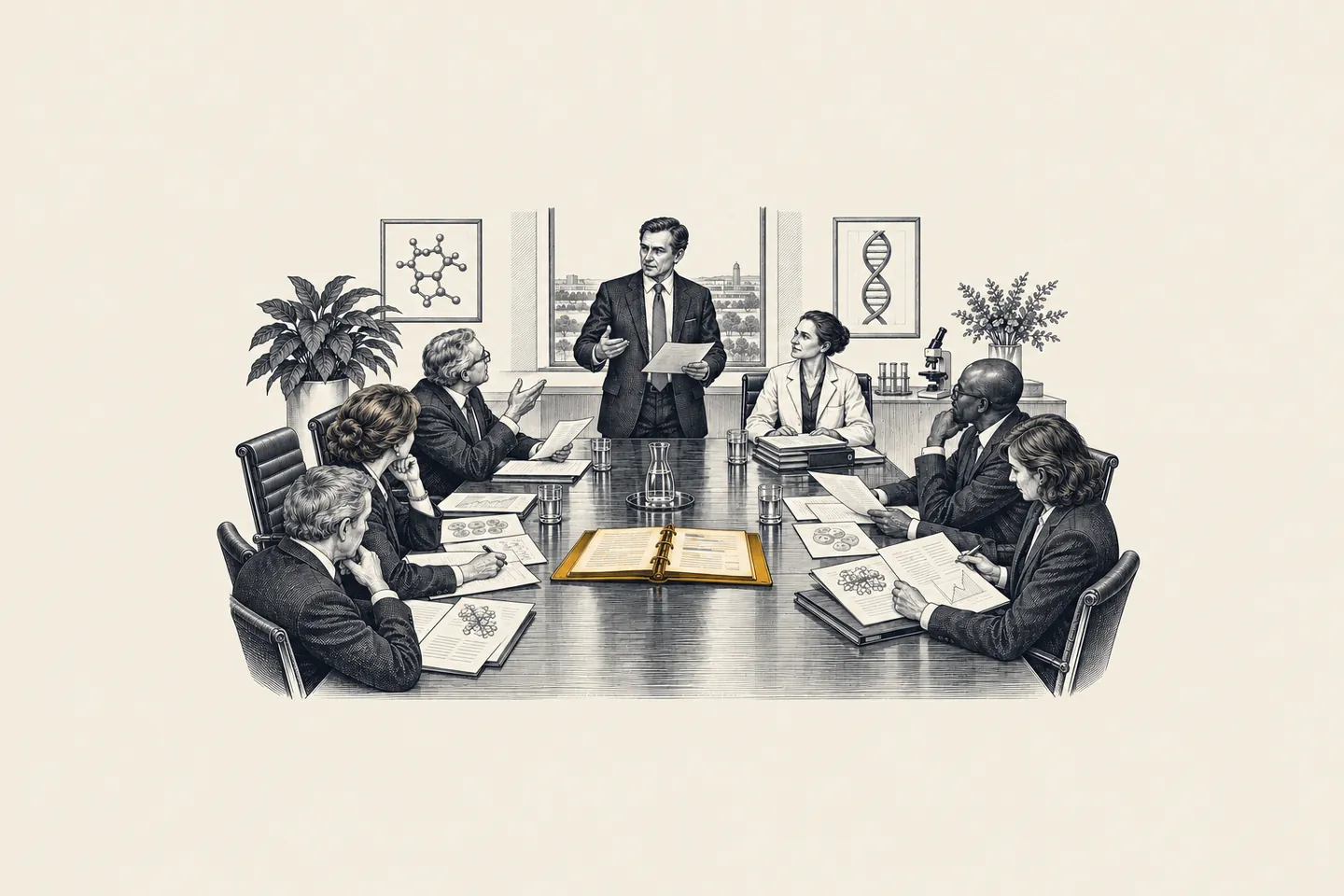
For the biotech research company, the pre-read can also make the next move clear. The board memo template gives a simple frame. State what the company can repeat. State what real use taught the team. Name the open risk. Name the decisions due. Set out the next 90 days.
This is not work for a polished story alone. It is work that makes the story harder to break. The CEO still needs to decide what the company will do with the challenge.
05 / 05 · The call
What must stay with the CEO?
In short
AI prepares the choice. The CEO, management team and board make it. For the biotech research company, judgment and accountability stay with the people who carry the outcome.
For the biotech research company, AI can request evidence. It can detect a late update. It can propose an escalation. It cannot decide the company’s strategy.
The same boundary holds for appointments. It holds for capital allocation. It holds for negotiations and crisis choices. It also holds for leadership communication. These choices belong to people who carry their effects.
For the biotech research company, run this process with the management team:
Pick one live choice
The CEO chooses a board issue or major company decision that needs a view soon.
Build the record
Each functional leader adds the facts they own. AI gathers them and shows what is still missing.
Run the opposing case
The CEO asks AI to test the plan, then asks the team which challenge has real force.
Make the call together
The CEO brings the prepared choice to the management team and board. People decide, own the action, and record why.
Personal use matters because it changes what a CEO can judge. A leader cannot set ambition for a use they cannot imagine. For the biotech research company, one CEO using AI on real work is a start. The larger change comes when the whole team shares the record and changes how it meets.
The questions below help set the boundary around that work.
Make it team practice
The next task is to turn the CEO’s use on a live choice into a shared management-team practice, with a clear boundary between AI preparation and human judgment. The function paper shows how an AI-augmented management team works and identifies the first changes to make. Use it to decide how the team will build a shared record and test the opposing case before people make and own the call.
The paper on what changes in the management team, with the first changes to make. Free, with a PDF to share.
Questions CEOs ask about this
What should I personally use AI for as a CEO?
Use AI to gather evidence and challenge your plan before a hard decision. Decide whether to test it now or let the board expose weak assumptions later. Ask it to build the case against you. Have it prepare the board’s hardest questions. Then make and own the call with your management team and board.
Which CEO workflows are the best place to start?
Start with a board pre-read, a deal review, or a key customer meeting. Each has a real choice behind it. Each gives AI clear work to prepare before a person makes the call.
What should a CEO automate, augment, or keep entirely human?
Let AI gather evidence, flag gaps, and prepare the challenge. Keep strategy and appointments with people. Keep capital allocation and negotiations with people. Keep crisis choices and leadership communication with people. Those choices carry corporate consequences.
How can AI improve preparation without replacing judgment?
Give it the facts behind a live choice. Ask it to form the opposing case and prepare hard questions. Then let the management team test the work and let the CEO and board decide.
How does the CEO’s own use affect adoption across the company?
A CEO can judge new ways of working only after using them. That experience changes what the CEO can ask for and back. It becomes structural when the management team shares definitions, confirms records, and changes its meeting rhythm together.

Founder, GRAIL
Johan has spent fifteen years in management consulting and executive leadership, including as Chief Product Officer of a SaaS company. He founded GRAIL to help European leadership teams work out what AI changes at the core of their business. He is the author of The Execution Revolution and the host of the ThinkRoom podcast.
Related reading
Sources
- What does an AI-augmented management team look like?: the shared management record, evidence preparation, and the boundary around human judgment. (accessed October 8, 2026)
- Biotech research CEO briefing: preparation work around scientific judgment and the need to retain program context. (accessed October 8, 2026)
- AI Board Memo Template for CEOs: the board memo structure for use, risk, decisions, and the next 90 days. (accessed October 8, 2026)
- The Delegation Problem: why a CEO’s own AI experience shapes what the company can imagine. (accessed October 8, 2026)
- Your Leadership Team Is Behind on AI: using AI to roleplay the views that challenge a plan. (accessed October 8, 2026)
Next scheduled review: February 3, 2027