
Contents · 6 min read
01 / 05 · The problem
Why has your roadmap become a list of reasons to wait?
In short
Keep the technical plan. IT has mapped the systems it must handle, but business leaders must decide how your company should change and which customer need deserves funds.
You are reviewing your CIO’s sound plan for data access and system links, but every line depends on another. A useful move in planning or first drafts then appears months away, even though your team may be able to begin with material it already has.
Business leaders own the choice about how the company should change. But IT was asked to plan it. Its view starts with systems, so work such as planning or first drafts may never appear. Those tasks can often start with material your team already has.
The issue is not that IT has done poor work. The issue is that your company has asked a technical team to make choices about what customers buy.
The first task is to see what AI changes in your business. Tool choices come after that point is clear.
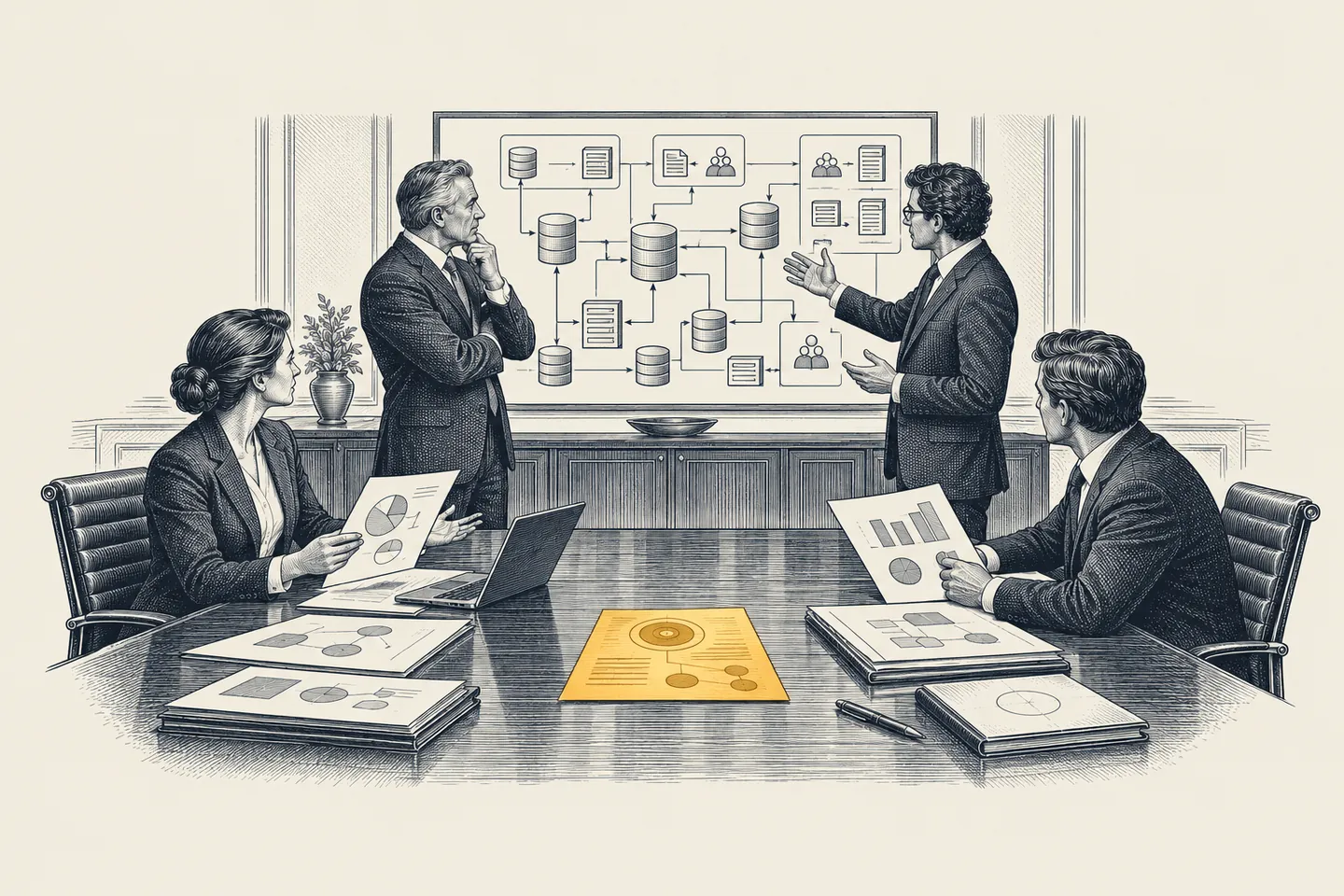
So the first stage belongs with the people who choose how your company will compete.
02 / 05 · First stage
What should your leadership team do first?
In short
Your leaders should use AI on their own work before they rank the company’s choices. They can judge a new way of working better once they have felt what it can and cannot do.
A briefing can help everyone understand the same basics, which is useful. But it does not show a leader what changes when they use AI on the real task in front of them.
Give each leader a real task from the week ahead. The task should matter enough that the result will be checked and used.
AI for leadership teams starts from this point because strategy depends on what leaders can picture. Direct use gives them a sound base for seeing where the business could move.
An AI strategy workshop can combine that use with working tools and a first roadmap.

That shared experience lets the team choose which changes deserve a place near the top.
03 / 05 · The choices
How should your team rank the business changes?
In short
Ask what AI could change in what your customers pay for, then rank three to five moves worth pursuing. The first choice should state a business change, not name a tool.
Your team does not need a complex score to make the first cut. It needs to separate a faster version of today from a change in what you sell.
Use three checks on each proposed move:
Customer value
State what would become better or newly possible for your customers.
What changes in what you sell
State whether the move changes what you sell or only makes today’s work faster.
What you will stop
Name the work you will leave for later so the first move has time and money. For the move you rank first, name the result that would justify continuing and the result that would make your team stop.
That last check matters because a roadmap with every good idea is not a choice. Know What You’d Kill makes the same point: a clear direction also rules work out.
The highest-ranked choice now needs to become a new way of working.
04 / 05 · Work redesign
How does a strategic choice become changed work?
In short
Your management team should redesign one workflow at a time, starting with the top choice. This shows what people must do in a new way before anyone sets out the systems behind it.
Your top choice can still be too vague to build. Your team must show where the work begins and who makes each key call.
Start with the current work because people know where it slows down or loses useful facts. Then set out how AI prepares the work and where a person must decide.
Use this working session:
Have management describe the work today
Mark the point where the chosen business change meets real work.
Have management set out the new workflow
Show how the workflow will deliver the chosen business change, including what AI prepares and what a person must still judge.
Name a leader to own the change
That person checks the result against the business choice.
Fund the people side of the change
Give your HR leader a real budget so people get help as their roles and daily work change.
Management owns the redesign because it changes the business. IT owns system access and integrations, while the HR leader owns how roles and daily work change.
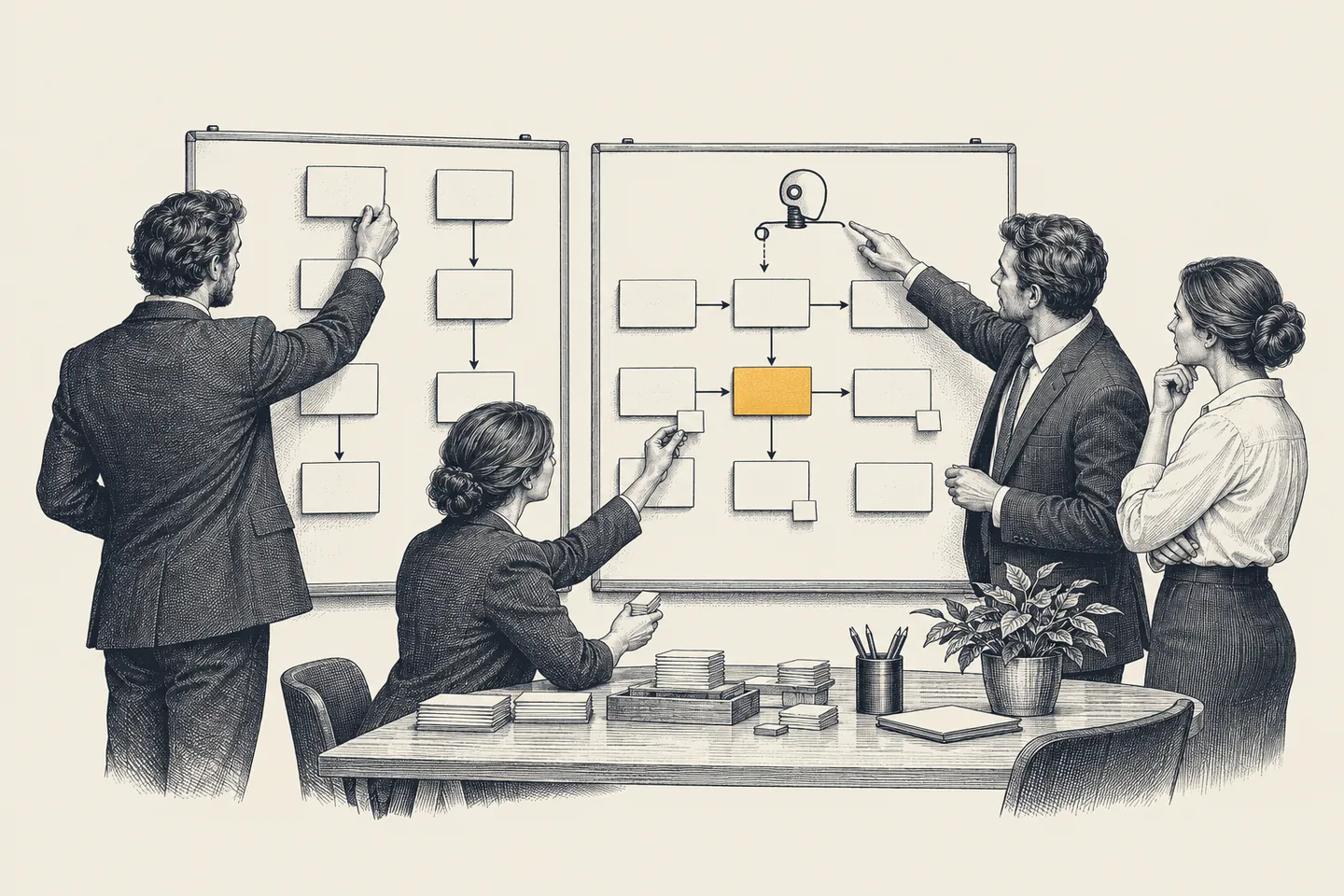
Real use can then sharpen both the tool and the work, which is how GRAIL’s three-step program moves from a roadmap to a tested change.
Only then can your CIO see which system need is real and which one can wait.
05 / 05 · Technical access
When should technical dependencies enter the roadmap?
In short
Add technical access when the redesigned workflow shows that it cannot work well without it. IT then receives a defined need and a named owner. It also gets a clear point in the work to support.
Your company may be able to start with material that leaders choose and check. That lets the team test the work before asking for broad access to live systems.
When the workflow needs current records, IT can plan read access for that source. If it later needs to update a record, the team can set approval rules before any write access is added.
Wider access should follow source quality and real use. Technology follows the choice.
This is where your first technical plan becomes valuable. Its work on access and system links can now sit behind a business need that management has chosen.
The roadmap should change when use brings new facts or weakens the case for an earlier choice. It can become a record of choices and proof, rather than a slide that stays fixed until the next planning round.
Choose what comes first
Your management team now has to use shared experience to rank three to five business changes and choose the first workflow to redesign before IT builds around it. See The Opportunity gives the team hands-on use of AI and three workshops to make that choice together. It ends with a ranked roadmap and custom AI agents for each leader, so the technical plan can follow a business direction the team has chosen.
Three to four weeks, three workshops with your management team: hands-on use of AI, custom AI agents for each leader, and a ranked roadmap of opportunities. Fixed fee, and no IT project to get started.
Questions CEOs ask about this
How do we build an AI roadmap without turning it into an IT project?
An AI roadmap that is not an IT project starts with your leadership team using AI, then ranking three to five business changes and redesigning the work around the first choice. You must decide which change goes first, because waiting for every system dependency can put useful work months away. That choice determines whether your technical plan serves a business change or remains the starting point for every move.
What should be decided before tools and architecture?
Choose which three to five moves deserve work and which one goes first. Tools and system design follow that choice.
How should leadership learning appear on the roadmap?
Each leader should use AI on real work, so the team ranks the next moves from shared experience.
How do choices become workflows?
Start with the highest-ranked choice and map the workflow it must change.
Who funds and owns each stage?
Management owns the redesign, and IT owns system access and integrations. The HR leader needs a real budget to help people adapt their roles and daily work.
How often should the roadmap be revised?
Revise the order when real use adds new proof or shows that an earlier choice is weak. That keeps the roadmap tied to choices your team can defend.

Founder, GRAIL
Johan has spent fifteen years in management consulting and executive leadership, including as Chief Product Officer of a SaaS company. He founded GRAIL to help European leadership teams work out what AI changes at the core of their business. He is the author of The Execution Revolution and the host of the ThinkRoom podcast.
Related reading
Sources
- What is AI consulting?: why the first task is to see what AI changes in the business. (accessed October 29, 2026)
- AI for leadership teams: why leaders need direct use before they can set direction. (accessed October 29, 2026)
- AI strategy workshop: how hands-on work can lead to working tools and a ranked roadmap. (accessed October 29, 2026)
- A McKinsey alternative for AI strategy: why the first roadmap should rank three to five moves. (accessed October 29, 2026)
- What does an AI-augmented product organization look like?: why technical access should grow in stages. (accessed October 29, 2026)
- What we do: how real use sharpens the workflow before the next choice. (accessed October 29, 2026)
Next scheduled review: January 31, 2027