
Contents · 8 min read
01 / 05 · The squeeze
Two parts of the firm are weakening at once
In short
Compliance work is losing margin as a senior partner nears retirement. The work still has to be done. But the knowledge needed for advice may leave with the partner.
Take a mid-market accounting and CFO advisory firm. Tax work and statutory accounts consume much of its team’s time. AI can cut that production time by 40 to 60 percent. One senior partner is also nearing retirement. She holds years of client history that the accounts do not show.
The firm is good at this work. Its clients still need each return and set of accounts. The work has also paid for the firm around it.
Yet the market now rewards that work less. Large networks can spread their tools across more clients. Scaled firms can also charge less. Client AI tools cut demand for standard advice.
The firm faces a second risk at the same time. One senior partner is nearing retirement. That partner holds years of client history.
The partner knows the owner’s real tax position. She knows the family issues behind a sale. She also knows why past choices were made.
Most of that is absent from the final accounts. It lives in calls and old notes. Much of it lives only in her head.
The accounting and CFO advisory CEO briefing shows why these risks meet. The work that paid for the firm gets cheaper. The knowledge needed for better advice starts to leave.
A personal handover will not hold all of it. To keep the client, the firm needs more senior time. It also needs a better way to hold what that time knows.
The first move is to free that senior time.
02 / 05 · The time
Move partner time toward the next decision
In short
Use AI to reduce the work behind tax and statutory accounts. Then move the time it saves into client choices. A faster file matters only if the firm changes how that time gets used.
For the firm, AI can prepare more of the repeat work. It can help with first drafts and checks. The named practitioner still approves the work.
This gain is real. Deadlines become easier to meet. Review queues get shorter. The commercial view of the sector shows how much production time can fall.

The firm now has a choice. It can treat the gain as spare capacity. Or it can move that time into client work.
For one client, that may mean preparing a succession choice. For another, it may mean testing a new business model. It may also mean judging whether the client is ready for AI.
The senior partner should spend less time rebuilding the past. She should spend more time helping the owner choose what happens next.
That is also the wider shift in AI for professional services. Repeat work moves into reusable methods. Professional judgment stays with the person who signs off.
For the firm, this changes the point of the AI work. The main result is partner time placed closer to the client’s next choice.
The firm then has to keep the client knowledge that gives that time value.
03 / 05 · The knowledge
Capture what the retiring partner knows
In short
Free time is not enough. Useful advice depends on client history that standard reports do not hold. The firm must capture that history before the partner leaves.
For the firm, the first knowledge source is one retiring partner’s client book. Start with structured talks about each key client. Add call notes and past advice. Add the tax history held in client files.
The aim is not a long manual. It is a firm-owned record that another senior person can use.
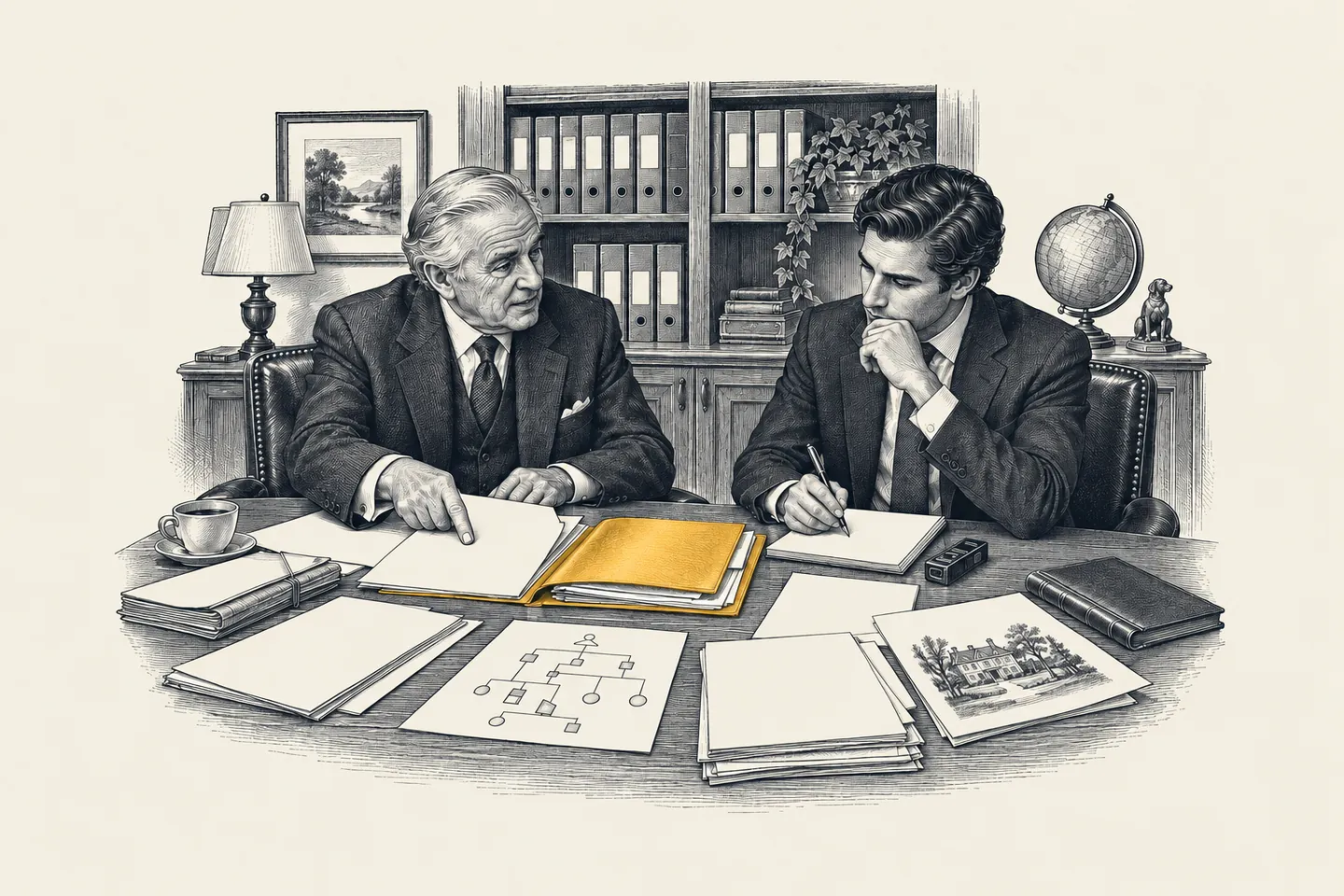
The record should explain the client’s real position. It should cover family succession issues. It should also hold the reasons behind past choices.
For the firm, this turns a handover into more than an introduction. The new lead can see what shaped the relationship. The retiring partner can correct gaps while she is still there.
The CEO briefing for accounting and CFO advisory firms makes the risk plain. Advice rests on knowledge built through long personal ties. A handshake cannot move all of it.
The firm should own the record. It should remain useful when tools change. Access must also match the rights agreed with the client.
With that history held by the firm, live signals can guide the next call.
04 / 05 · The decision
Join client history to current signals
In short
Combine the client’s history with current financial and operating signals. Use that view to prepare the next choice. The senior practitioner still makes the call and owns the judgment.
For the firm, a report explains what has happened. A decision service adds what the firm knows about the client. It then puts both beside the choice now due.
A fall in cash may mean little on its own. The client’s tax position may change what can be done. A planned handover in the family may change it again.
The AI-supported system can keep the view current. It can flag changes and prepare options. The senior practitioner tests that work with the client.
The pattern is set out in the AI-augmented finance department. Current signals matter when they lead to clear review and action. More comments alone do not improve a choice.
From reporting history to shaping decisions
| Reporting history | Shaping decisions |
|---|---|
| Juniors assemble each standard file. | AI prepares repeat work. Juniors follow a set learning plan. |
| Client facts sit across past reports. | Client history stays in a firm-owned system. |
| The partner explains the figures. | The partner owns the call and the judgment. |
| Work ends when the report is sent. | Reviews follow live signals and agreed actions. |
| Juniors learn through repeated assembly. | Juniors practice review and client work through a curriculum. |
For the firm, this also changes how people learn. Junior production will shrink. The firm cannot trust routine assembly to train future partners by chance.
Junior staff need planned work on review and client context. Senior staff spend more time on hard choices. They also remain accountable for professional quality.
The service now needs a form clients can buy and use.
05 / 05 · The package
Sell a recurring decision service
In short
Package the work around a set review rhythm and named client choices. Use a retainer where the advice grows in value over time. Start with one retiring partner’s client book.
For the firm, the offer should begin with a clear client need. The client may face a family succession. It may need to change its business model. It may need to judge its own AI plan.
The firm then agrees what signals it will watch. It sets when those signals will be reviewed. Each review ends with an owner and a next action.

A similar firm takes another path. It uses AI to lower the cost of compliance. It then relies on a personal introduction when the partner retires.
Its cost base may improve. Its client knowledge still leaves. Its advisory offer also stays tied to the last report.
The firm in this article can start smaller:
Choose one client book
The CEO starts with one partner who plans to retire. Pick the clients where the advice depends most on personal history.
Name the next decisions
The retiring partner and new lead list the choices each client will face. Keep only those where the firm can add context and judgment.
Set the review rhythm
The lead and client agree when signals will be checked. Each review must end with a named action.
Set the commercial form
The commercial lead uses a retainer where advice builds over time. Procedure work can keep a fixed fee. Senior judgment can link to an agreed result where that fits.
This follows the move described in AI for professional services. Production gets faster. Senior judgment becomes the service clients return to.
The next step is to choose that first client book and set its first review.
Choose the first client book
The task now is to choose the first retiring partner’s client book and set its review rhythm around each client’s next decision. The accounting and CFO advisory CEO briefing explains why compliance work is losing margin while relationship knowledge remains central to advice. Use it to brief the management team on what must be captured before the partner leaves, then decide where freed senior time should move first.
What AI changes in accounting and CFO advisory, written for the CEO. Free to read, no form.
Questions CEOs ask about this
How can an accounting and CFO advisory firm use AI to move from producing reports to improving client decisions?
Cut reporting work with AI, then shift partner time to clients’ next decisions. A mid-market firm can cut tax production time by 40 to 60 percent. A retiring partner may also take vital client history with her. The CEO must turn freed time and retained knowledge into recurring advice.
Which compliance services face the fastest price pressure?
Tax work and statutory accounts already face high production pressure. The evidence here does not rank every service. Use distance from client judgment as the test: repeat work faces more pressure.
What forward-looking advice will clients pay for?
Start with choices that need trust and client context. The evidence supports succession planning and business model change. AI readiness for owner-managed firms is another fit.
How should recurring advisory packages be designed?
Build the package around named choices and a set review rhythm. Use a retainer when the advice gains value over time. Keep procedure work on a fixed fee.
What client data is needed to provide useful guidance?
Keep the client’s tax history and past choices. Add family succession issues and relationship context. Then join that history to current financial and operating signals.
How do junior and senior roles change?
Juniors do less repeated assembly, so the firm needs a set learning plan. They should practice review and client work. Seniors focus on relationships and hard choices while keeping full accountability.

Founder, GRAIL
Johan has spent fifteen years in management consulting and executive leadership, including as Chief Product Officer of a SaaS company. He founded GRAIL to help European leadership teams work out what AI changes at the core of their business. He is the author of The Execution Revolution and the host of the ThinkRoom podcast.
Related reading
Sources
- The Knowledge Walks Out: the pressure on compliance work and the client knowledge held by senior partners. (accessed October 8, 2026)
- The practice is worth what your partners know: the 40 to 60 percent fall in production time for tax work and statutory accounts. (accessed October 8, 2026)
- AI for professional services: why repeat production moves into reusable methods while accountability stays with the practitioner. (accessed October 8, 2026)
- What does an AI-augmented finance department look like?: current signals, action rhythm and the need for planned junior learning. (accessed October 8, 2026)
Next scheduled review: February 11, 2027