
Contents · 7 min read
01 / 05 · The choice
What does your leadership team not yet know?
In short
Your first external engagement should resolve the first question that stops your team from acting. The format follows from that question.
In your leadership meeting, one person wants a pilot because it feels concrete, while another backs a workshop because it feels easier to approve. If your team cannot agree on the question it needs answered, the first engagement must help it reach one shared view before you choose the format.
All three can produce useful work, so none is a poor choice by default. The risk comes when the format answers a question your team is not asking.
Your first task is to name the gap in one plain sentence. Can your leaders set priorities now? Do they need direct use before they trust their own choices? Or is one new way of working ready to face real work?
Discuss that gap with your leadership team before you review proposals. If the group gives different answers, your first engagement must help it reach one shared view.
That starts with the question a diagnostic must answer.
02 / 05 · Diagnostic
When should you start with a diagnostic?
In short
Start with a diagnostic when your leaders cannot yet see what AI changes or choose where to act. It should end with a clear call on whether they are ready to set priorities. If they are not, it should state what holds them back.
Your company may have sound systems and skilled tech staff. Those strengths matter, but they do not show whether management can make the choices ahead.
A useful AI readiness assessment tests whether your leaders can see and act on what AI changes. It starts with the people who make the calls because they will set the aim.
Can leaders explain what may change?
Ask each leader to state where AI could change what customers buy or how the work gets done.
Can they choose where to act?
Ask the team to rank the few changes that deserve management time.
Can they own the next decision?
Name the leader who will take each chosen change forward.

The diagnostic should end with a written decision: ready to set priorities or not ready yet. If leaders can choose but still lack belief from direct use, the next step is a workshop.
03 / 05 · Workshop
What should a leadership workshop produce?
In short
Use a workshop when leaders can discuss priorities but need hands-on experience before they will act. It should end with working tools and three to five ranked opportunities.
A good talk can give your team useful context, and that may improve the next meeting. But understanding grows faster when leaders use AI in their own work and judge the result themselves.
An AI strategy workshop should be hands-on, so each leader builds and uses working tools. The team should also try a changed workflow together, then refine the tools through real use.
Your team should leave with more than fresh ideas:
Have each leader use a tool on real work
The result should be useful enough to keep using after the session.
Have the team test one changed workflow
This shows how the work may move and where people must still judge.
Have management rank the next moves
End with three to five opportunities that deserve action.
GRAIL’s first three-workshop step does this on your actual business over three to four weeks. The tools belong to your company, so the team can keep learning from them.
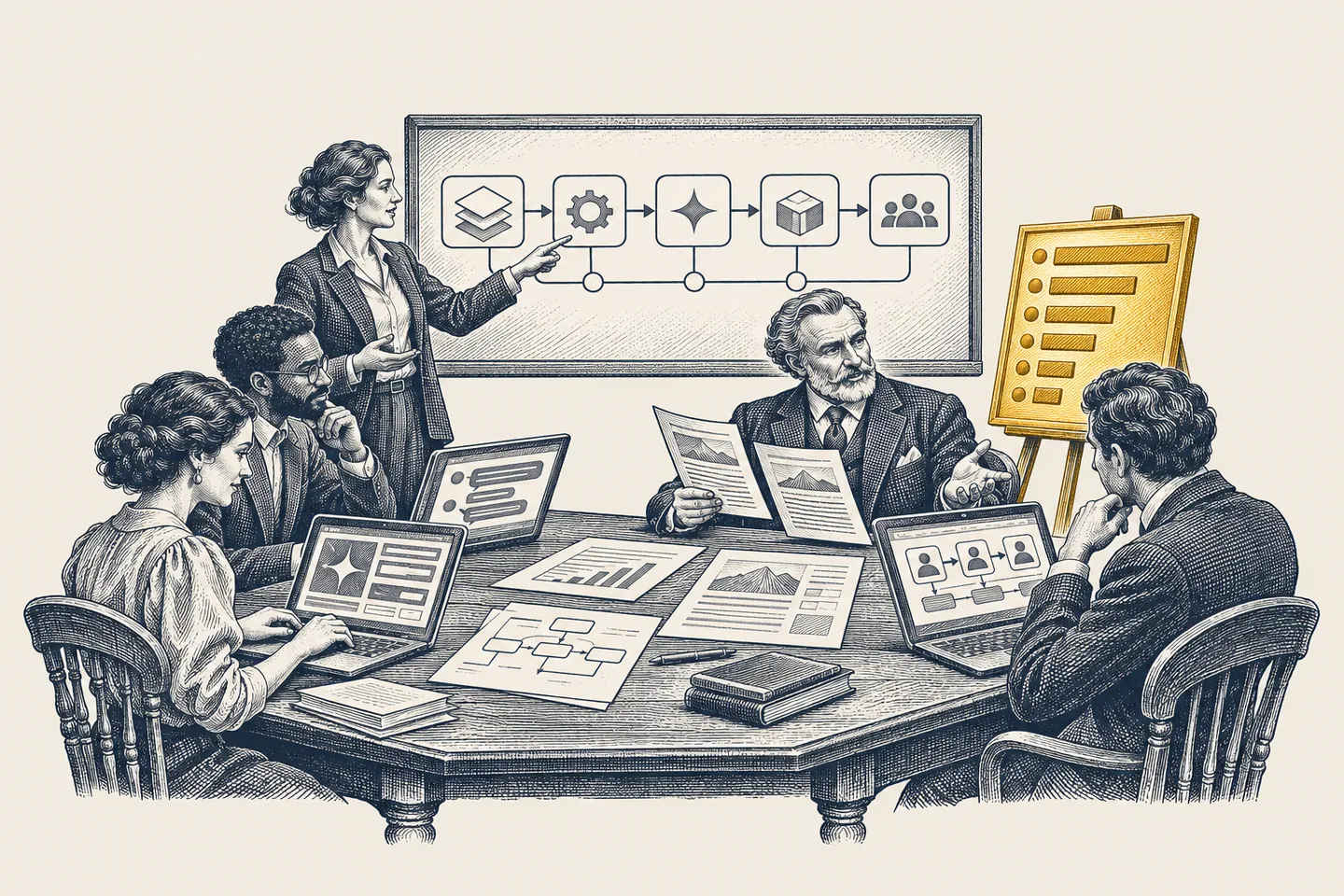
When one ranked opportunity has an owner and a clear work plan, it may be ready for a pilot.
04 / 05 · Pilot
When is a workflow ready for a pilot?
In short
Start a pilot only when one changed workflow has an executive owner and a clear quality bar. Test the whole job under real conditions. End with a written decision to continue or stop.
A capable demo is useful evidence because it shows what the tool can do. But a demo does not show whether your company can carry the new work each day.
Before the pilot starts, use this handoff:
Have an executive own the business result
The pilot lead may run the test, but an executive must own what changes.
Have the owner set the quality bar
Write what the work must achieve before another round earns support.
Have the team test the whole job
Run the changed workflow under real conditions, including the points where people must judge.
Have the executive record the decision
Continue when the tool clears the bar and removes a real unknown. Stop when the same failure returns unchanged.
Why AI pilots do not scale sets out this gate because a working tool can still leave the business unchanged.
The contrast is a pilot with an impressive result but no owner for the work around it. The old handoffs remain, so the faster output waits in the same queue. As The Margin That Blinds You explains, a tech test can look good while the way your company works stays the same.

Once the pilot gate is clear, you can place all three formats in one decision path.
05 / 05 · Start small
How should you choose the first format?
In short
Start with the first unanswered question, then stop when that question is resolved. If every question remains open, run the formats as one short sequence.
| Format | Unresolved uncertainty | Work performed | Tangible output | Concluding management decision |
|---|---|---|---|---|
| Diagnostic | Can leaders see what AI changes and choose where to act? | Test how leaders read the shift and make choices. | A written readiness finding and the gaps to close. | Decide if leaders are ready to set priorities. |
| Workshop | Can leaders act with belief gained from direct use? | Use AI on their own work and test a changed workflow. | Working tools and three to five ranked opportunities. | Choose which opportunity moves forward. |
| Pilot | Can one changed workflow work under real conditions? | Run the whole job against a set quality bar. | Evidence from real work and a written result. | Decide whether to continue or stop. |
You may need all three formats, and that does not mean buying three separate projects. The work can form one path because each step should make the next choice easier.
Can your leaders set priorities?
If not, start with a diagnostic that ends with a readiness decision.
Have they gained belief from direct use?
If not, run a workshop that leaves working tools and ranked opportunities.
Is one changed workflow ready for real work?
If yes, run a pilot with an owner and a quality bar.
Do not move to the next format just because it sounds more advanced. Move when the prior decision is clear and the next unknown now matters.
A short first engagement can also test the partner. Agree on the output before work starts, then judge whether the work helped management make the promised decision.
The next decision is to choose the first open question and put it in the brief.
Choose the first question
Your leadership team now needs to name the first unanswered question and the decision that will resolve it. GRAIL's See The Opportunity step gives leaders hands-on use over three workshops, then turns what they learn into a ranked roadmap. It fits when the open question is where to start, because the team can choose which opportunity should move forward without commissioning a pilot before the owner and quality bar are clear.
Three to four weeks, three workshops with your management team: hands-on use of AI, custom AI agents for each leader, and a ranked roadmap of opportunities. Fixed fee, and no IT project to get started.
Questions CEOs ask about this
Should our first external AI engagement be a diagnostic, a leadership workshop, or a pilot?
Start with a diagnostic if leaders cannot set priorities; use a workshop if they need hands-on experience before choosing; run a pilot only when one workflow has an executive owner and a clear quality bar. You must decide which unknown blocks action first, because the wrong format can produce useful work that never helps management act. The stake is whether the engagement ends in a clear decision.
When is a readiness assessment genuinely useful?
It is useful when your leaders cannot agree on what AI changes or where the company should act. It should end by stating whether they can set priorities now and what must change if they cannot.
What should a workshop produce beyond inspiration?
Your leaders should leave with tools they have used on their own work. Management should also have three to five ranked opportunities and a shared view of which one moves next.
When does a pilot begin too early?
It begins too early when no executive owns the business result or the team lacks a clear quality bar. It is also early when the surrounding workflow has not been set out.
Can a short engagement test both the opportunity and the partner?
Yes, if you agree on the output and final decision before the work starts. You can then judge whether the opportunity holds up and whether the partner helps your leaders act.
What decision should conclude each format?
A diagnostic decides whether leaders are ready to set priorities. A workshop decides which opportunities deserve action, while a pilot decides whether one changed workflow should continue or stop.

Founder, GRAIL
Johan has spent fifteen years in management consulting and executive leadership, including as Chief Product Officer of a SaaS company. He founded GRAIL to help European leadership teams work out what AI changes at the core of their business. He is the author of The Execution Revolution and the host of the ThinkRoom podcast.
Related reading
Sources
- AI Readiness Assessment for Leadership Teams: what readiness means and the management decision an assessment should test. (accessed November 2, 2026)
- AI Strategy Workshop for Management Teams: why workshops should use real work and leave working tools plus ranked opportunities. (accessed November 2, 2026)
- What we do: how hands-on use leads to working tools and a clear choice of opportunities. (accessed November 2, 2026)
- Why AI Pilots Don’t Scale: why a pilot needs an owner and quality bar before its written decision. (accessed November 2, 2026)
- The Margin That Blinds You: why a strong demo can leave the company’s work unchanged. (accessed November 2, 2026)
Next scheduled review: February 23, 2027