Contents · 7 min read
01 / 05 · Persuasion
Why is a persuasive brief not enough?
In short
A clear brief can save your team time, but smooth prose does not prove sound thought. You need to see the work behind the answer before it shapes a major decision.
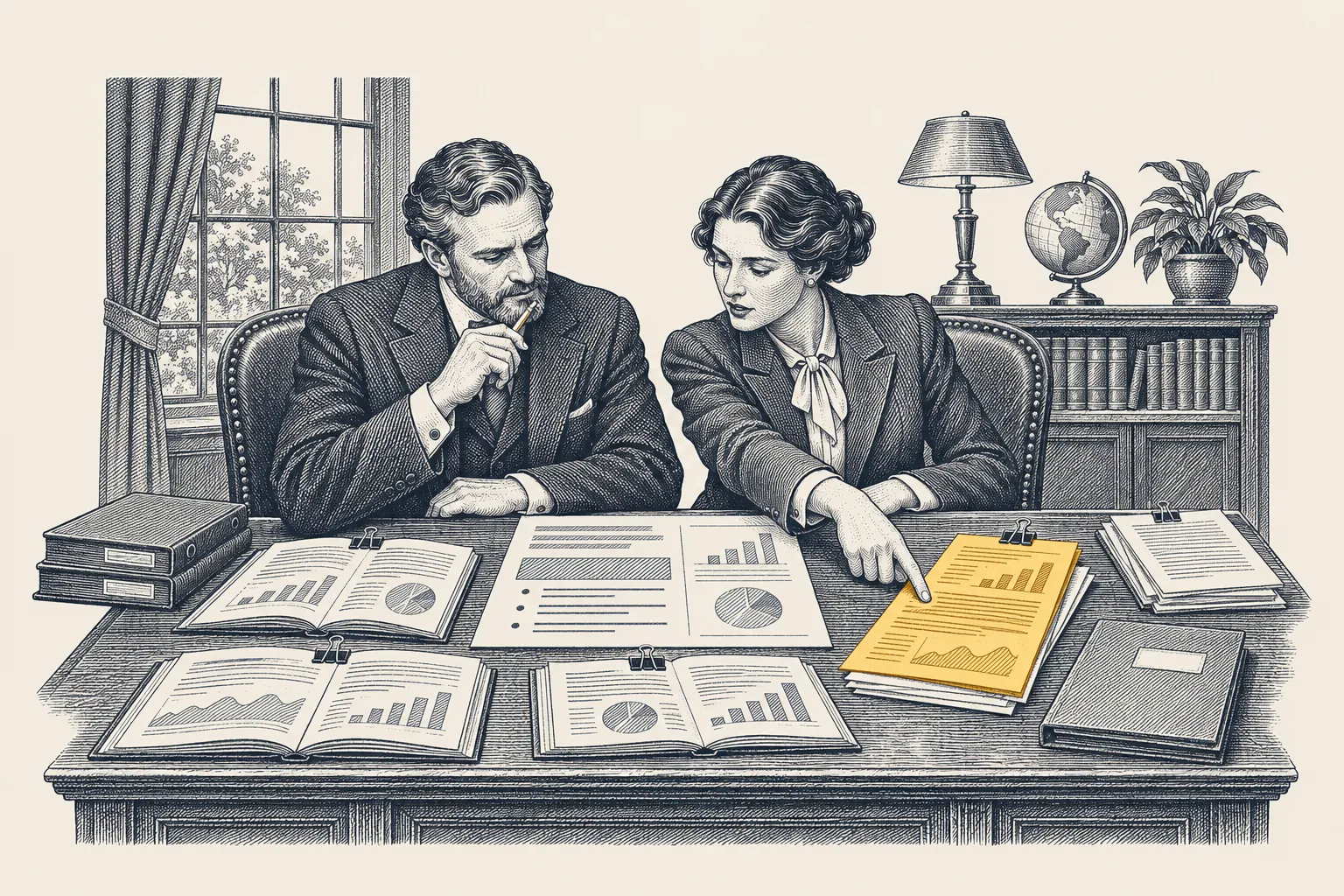
Before your leadership meeting, you open an agent’s brief and find clear logic with a firm next step. It reads like expert work, but unless each key claim points to its source and weak facts remain visible, you cannot tell whether the advice is sound enough to shape the decision.
That is useful because a poor brief can waste a leadership meeting. Your team should not spend that time fixing notes or finding reports that already exist.
But speed does not help when the call is wrong. As Copilot Is Not an Agent argues, a team can work faster without making one decision better.
The risk grows when smooth prose hides a weak fact or turns a guess into a claim.
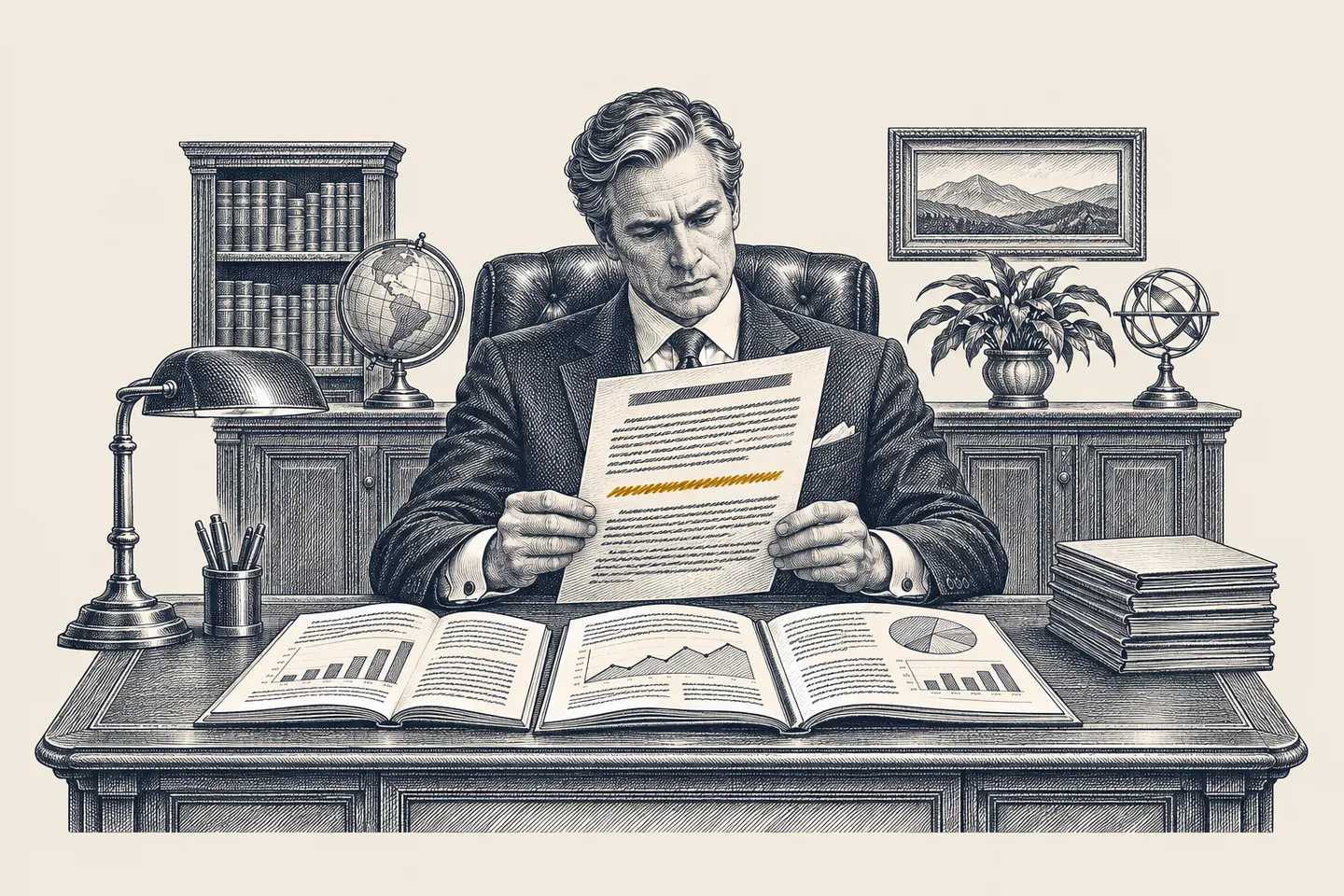
Judge the brief by how well it prepares your decision, which starts with telling the agent what your team must decide.
02 / 05 · The assignment
What should the agent test?
In short
Begin with the decision and your current diagnosis, which means what your team thinks is happening and why. The agent then has a clear case to test instead of a topic to sum up.
A broad scan can help you learn, but a major decision needs a tighter task. A request to research your pricing leaves the real issue open.
Give the agent this brief:
Name the decision
State what your leadership team must decide and when it needs the answer.
State your current diagnosis
Write what you think is happening and why you think it is true.
Set the test
Ask what supports your view and what could prove it wrong.
Name the output
Ask for the facts and gaps, followed by the trade-offs your team must judge.
This is how an AI-augmented management team can start each live issue. The decision comes first, followed by the team's current view and the facts behind it.
Your team owns that starting view because the agent may lack key parts of the setting. Once the task is clear, you can control which facts it may use.
03 / 05 · The evidence
Where does evidence end?
In short
Let the agent use sources your company has approved, and make each key claim point back to them. Weak facts must remain in view. Your team should always see where proof ends and the agent's reading begins.
Use this test on every brief.
Source
A named record supports the claim, and the brief points your team to it.
Reading
The agent draws a view from the facts, so it marks that view as its own reading.
Gap
The source is old or silent on the point, so the missing proof stays open.
A clean summary is helpful, but it must not hide a failed search. That gap tells your team what needs more work before the decision is ready.
Give the agent access only to approved sources that fit the task. If it can read company systems, set clear rights and retain the source record. AI Agent Access to Your Systems explains why access must be split into clear choices.
A sound answer should carry its sources and limits. The same rule guides the AI-augmented data and analytics team, where a person checks whether the meaning fits before acting.
Once fact and inference are easy to tell apart, the agent should try to defeat the case it has built.
04 / 05 · The challenge
Why require the case against?
In short
Ask the agent to build the strongest case against the proposed choice. It can expose missed facts and weak claims, but your team must still judge the trade-offs.
Put two versions of the same brief side by side. One gives a polished view and a firm next step, but it hides the guesses behind them.
The useful version starts with your decision and current diagnosis. It shows the proof for both, marks what is weak and then argues the other side.
That challenge matters because senior teams can miss facts already in front of them. The Skills That Survived describes a test in which an AI board used the given evidence better than the human boards.
The agent can test your story and draft the questions your board may ask.
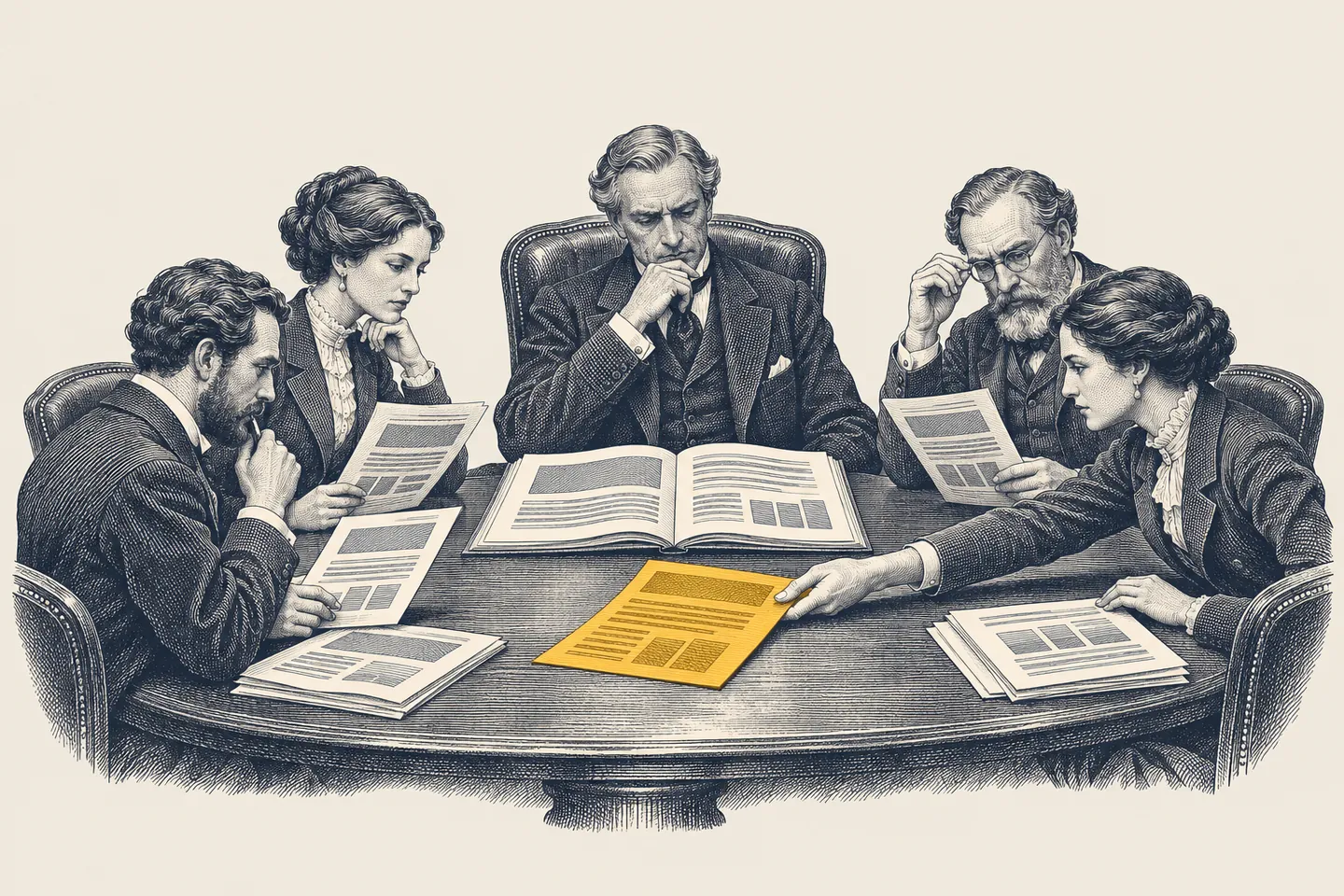
Still, it does not bear the result. Your leaders know which risks the company can take, so the next step is to set the line between preparation and judgment.
05 / 05 · Final call
What must remain yours?
In short
Use the agent for research and challenge around a major decision. Correct any missing context yourself, then keep the trade-offs and final call with the leaders who bear the result.
The same split works across the choices your company faces.
| Decision | What the agent may prepare | What must stay visible | What you retain |
|---|---|---|---|
| Pricing | Test the case and its likely effects. | Weak facts about demand or margin. | The price change and its risk. |
| Strategy and annual planning | Compare plans with past choices and test forecasts. | Open assumptions and facts that do not fit. | The bet and the funds behind it. |
| Board preparation | Draft hard questions and the opposing case. | Weak points in the proposed story. | The board case and its claims. |
| Acquisition review | Test a target against your deal thesis. | Gaps in the case and claims about fit. | The terms and the final call. |
| Leadership decisions | Gather prior facts and prepare questions. | Missing context or facts that may be unfair. | Each appointment and people decision. |
| Crisis response | Keep a checked timeline and split fact from claim. | Reports that have not been checked. | Each major call and message. |
The management team report applies this split to the work of the CEO and leadership team. Agents prepare the case, while leaders keep the choices that carry real costs.
Use the split on your next live decision:
Have the owner write the task
Name the decision and the current diagnosis.
Have the agent build the brief
Require sources and mark each weak fact.
Have the agent argue against the plan
Ask for the strongest case on the other side.
Have the owner correct the context
Add facts the agent could not see.
Have the right leaders decide
Weigh the trade-offs and record the final call.
You should use the agent yourself because you need to know what it can judge. The Delegation Problem explains why a CEO cannot set the aim for a tool they have not learned to assess.
The next move is to put these rules into your management team's own work.
Set the working rules
Your management team now needs to turn these rules into a repeatable way to prepare live decisions, with sources and weak facts kept visible before leaders weigh the trade-offs. GRAIL's paper on the AI-augmented management team explains what changes in the team's work and the first changes to make, so you can define where an agent prepares the case and where your leaders' judgment begins.
The paper on what changes in the management team, with the first changes to make. Free, with a PDF to share.
Questions CEOs ask about this
Should I use an AI agent to research strategic questions and prepare decisions?
Yes, a CEO should use an AI research agent to gather approved facts and build the strongest case against the current view. The CEO keeps the final call. When a polished brief lands before your leadership meeting, you must be able to see which claims are weak and which assumptions remain open. The decision is where to draw the line between preparation and judgment.
Which recurring CEO decisions benefit most?
Pricing and annual planning benefit when the agent can test key claims. Board work and deal reviews also gain from a strong opposing case. People and crisis decisions need tight access rules, while the call stays with you.
How should the agent distinguish evidence from inference?
Make it link each fact to a source. Any view drawn from those facts should be marked as inference, while missing proof stays open.
What sources should it be allowed to use?
Use sources your company has approved for that task. Give access only where needed, and keep the source behind each key claim.
How do I prevent polished output from hiding weak reasoning?
Require the brief to show weak facts before giving its view. Then ask for the strongest opposing case and check each key claim against its source.
Which parts of the decision must remain mine?
You keep every trade-off and the final call. That includes company direction and major spending, as well as people decisions and any choice made in a crisis.

Founder, GRAIL
Johan has spent fifteen years in management consulting and executive leadership, including as Chief Product Officer of a SaaS company. He founded GRAIL to help European leadership teams work out what AI changes at the core of their business. He is the author of The Execution Revolution and the host of the ThinkRoom podcast.
Related reading
Sources
- What does an AI-augmented management team look like?: how agents prepare briefs while judgment stays with leaders. (accessed November 2, 2026)
- Management team report: how a decision can arrive with its weak points and opposing case ready. (accessed November 2, 2026)
- Copilot Is Not an Agent: why faster work does not ensure a better decision. (accessed November 2, 2026)
- The Skills That Survived: why sound use of evidence matters at board level. (accessed November 2, 2026)
- The Delegation Problem: why CEOs need direct use before they can judge what AI should do. (accessed November 2, 2026)
- AI Agent Access to Your Systems: how to set rights and sources for a company agent. (accessed November 2, 2026)
- AI-augmented data and analytics team: why an answer should carry its sources and limits. (accessed November 2, 2026)
Next scheduled review: February 18, 2027