Contents · 7 min read
01 / 05 · Succession
Why does succession expose the current model?
In short
A founder-led wealth firm may hold trust in a few senior advisors. Those same people still help make the advice. When they leave, the firm risks losing both skill and client context.
Consider a founder-led wealth firm nearing a handover. Its senior advisors spend over 40 percent of their time away from clients. They make reports and build portfolios. They also handle the checks tied to each case. The same people hold the client story, so their exit puts both skill and context at risk.
For the wealth firm, the same senior advisors do two jobs. They help make the advice. They also hold the client story.
Clients value that close read, and with good cause. A senior may know years of past calls. They know the family needs behind each choice. The firm is right to protect that bond.
The risk appears when the senior leaves. A younger advisor may get a warm introduction. That step cannot pass on years of client knowledge.

The wealth-management CEO briefing sets out two paths. One keeps this reliance in place. The other moves client knowledge into the firm.
The first test is what happens when AI cuts the work around each meeting.
02 / 05 · Back office
What happens when AI makes advice cheaper to produce?
In short
AI can cut the work needed to make advice. Used only in the back office, it still brings a useful cost gain. Yet the firm keeps its reliance on senior advisors and added support staff.
| Keep the current model | Rebuild the advice model |
|---|---|
| Work behind advice: AI trims reports and routine checks. | Work behind advice: AI takes on much of the work. |
| Advisor time: The old mix stays in place. | Advisor time: More time goes to clients and judgment. |
| Succession: The firm relies on a warm handover. | Succession: Client context moves into firm records. |
| Growth: More clients still need more support staff. | Growth: Each advisor serves more clients at greater depth. |
| Revenue: Fees stay tied to assets alone. | Revenue: More of the fee rests on advice. |
The first path has real value. Reports move faster. Routine checks use less time. Costs fall, and the team gets time back.
For the wealth firm, that is a sound gain. But the senior still holds the client past. The next client may still bring more support work.
The CEO briefing draws the same split. Back-office AI trims the old model. A full redesign changes how advisor time gets used.
The first path is also easier. It asks less of the firm. It leaves the main point of reliance in place.
That gap matters more once clients bring research of their own.
03 / 05 · Pricing power
What still earns a fee when clients bring their own research?
In short
Clients can now arrive with AI-assisted research. Standard facts and reports then lose some pricing power. Trusted judgment gains weight when the client faces a hard choice.
For the wealth firm, the research pack still has value. Clients need sound facts. A clear report can help them choose.
Yet some clients will have done their own research first. They may bring a view of the issue. They may also know what they want to ask.
An advisor who brings more facts may repeat work. An advisor who brings judgment can still change the choice.
The commercial director briefing names where that judgment sits. It includes behavior coaching. It also includes the read on who makes a family choice.

For the wealth firm, this changes the advisor’s role. Less time goes to making the pack. More time goes to what the facts mean for this client.
That may mean helping a client stay with a sound plan. It may mean reading a hard family choice. It may mean taking a clear stand.
This judgment can still earn a fee. It cannot scale while it stays inside one advisor’s head.
The next issue is how that judgment moves to the next advisor.
04 / 05 · Firm record
How does the next generation inherit client judgment?
In short
A warm introduction can help, but it cannot carry the client’s full past. The firm must keep the history behind each key call. The next advisor then starts with context instead of a name and a file.
For the wealth firm, the handover begins before retirement. Store each client meeting and investment memo. Add each objection the team has handled. Record how the team responded to a major life event.
The warm introduction still has a role. It gives the client a new face. But the meeting alone cannot pass on years of trust.
A firm record can carry more. It shows the facts behind past advice. It also keeps the reason for each choice. The next advisor can see how trust was built.
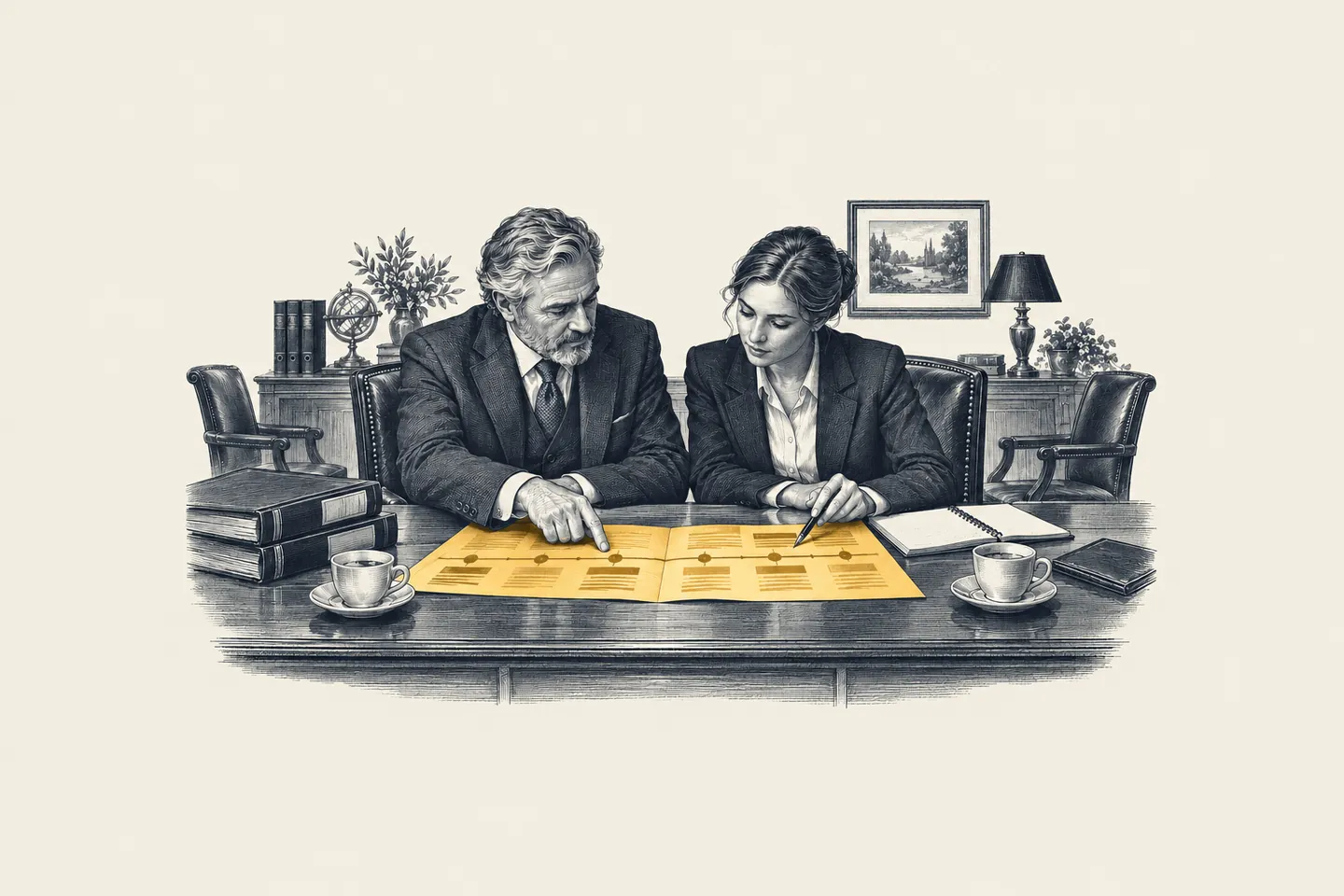
For the wealth firm, this changes the handover. The younger advisor can prepare from the full client past. The senior can review that read before the meeting.
The record also shows what AI should do. It can find past facts and prepare a brief. The advisor still makes the client call.
Once the record belongs to the firm, the CEO can change what earns the fee.
05 / 05 · Fee model
What should the wealth firm charge for next?
In short
The firm should use freed time to sell more advice, not more output. Revenue can then rest more on client judgment and less on assets alone. That choice belongs with the CEO and the board.
For the wealth firm, cheaper production is a real gain. Each advisor can handle more clients at greater depth. The firm needs less added support as it grows.
That does not prove smaller client groups will pay. It does not settle each fee. It gives the CEO more room to test a new model.
The aim is an advice-based model. More of the fee rests on the value of advice. Less of it rests on assets alone.
This fits the wider model of an AI-augmented professional-services firm. The system prepares and remembers. The professional owns the judgment.
For the wealth firm, five moves follow:
Split the work
The CEO and senior advisors mark what AI can prepare. They also mark the calls that need judgment.
Set the use of saved time
The CEO moves freed hours into client meetings and hard calls.
Build the record
Senior and younger advisors log context after each key meeting.
Test the fee
The finance lead tests where advice can earn a fee beyond assets alone.
Take it to the board
The CEO reports advisor time and handover depth. Cost saved stays on the page too.
The next step is to put that new model into the firm’s full plan.
Build the advice model
The task now is to turn lower production costs into an advisory model that protects client context and gives advisors more time for judgment. GRAIL's CEO briefing puts that choice in the wider economics of wealth management, including the split between trimming the old model and rebuilding it around advice. Use it to frame the management discussion about which model the firm intends to build.
What AI changes in wealth management, written for the CEO. Free to read, no form.
Questions CEOs ask about this
How will AI change the advisory model and economics of a wealth management firm?
AI makes wealth advice cheaper to produce, so trusted judgment should earn the fee. In the founder-led wealth firm here, senior advisors hold the client context. That context gives their judgment value. AI can cut support work, but savings alone leave succession risk intact. The CEO must choose whether to bank savings or rebuild around advice.
Which parts of advice become commoditized?
Research and routine reports get cheaper to make. So do parts of portfolio work and compliance. They still matter, but they no longer bear the full fee.
Where can advisors still create pricing power?
Trusted judgment depends on the client’s full context. Behavior coaching and the read on family needs still call for a trusted advisor. The fee can move toward that work as production gets cheaper.
Can AI make smaller client groups profitable?
The evidence here does not show that smaller client groups become profitable. It shows that each advisor can handle more clients with less added support. Test the full segment economics before making the claim.
How should the human advisor role change?
The advisor should spend less time making the pack. More time should go to client talks and hard calls. The advisor should still own the advice.
What must remain explainable and supervised?
Client judgment should keep a clear human owner. The evidence does not support one fixed wealth-specific control model. Set the exact checks before client-facing use.

Founder, GRAIL
Johan has spent fifteen years in management consulting and executive leadership, including as Chief Product Officer of a SaaS company. He founded GRAIL to help European leadership teams work out what AI changes at the core of their business. He is the author of The Execution Revolution and the host of the ThinkRoom podcast.
Related reading
Sources
- When the Founders Leave: the split between back-office gains and a rebuilt advice model. (accessed October 8, 2026)
- What’s Changing on Your Advisory Floor: the shift from client research to judgment, and the need for a firm record. (accessed October 8, 2026)
- What does an AI-augmented professional services firm look like?: why preparation can move to AI while judgment stays with the professional. (accessed October 8, 2026)
Next scheduled review: February 8, 2027