
Contents · 6 min read
01 / 05 · The savings
What your AI savings tell you
In short
Your AI savings are real. But they measure the work behind the scenes: how long it took and who did it. They say nothing about what your customers pay for, and that is where the bigger question sits.
Take an engineering consultancy. One engineering brief used to keep a team busy for a week. With AI, a senior engineer now does most of it in a day, and the work is as good or better.
On the cost side, this is a great result. Projects finish faster, and fewer people are tied up on each one. The AI programme reports it as a success, and it is.
But every number in that report is about the work behind the scenes. None of them tells you what happened to the thing the client pays for. To see that, you need to start somewhere else.
02 / 05 · The sentence
What do your customers pay you for?
In short
Write it down in one sentence. Name what the customer wants, and then what you actually charge for. Often those are two different things, and you need both halves for the next step.
Do this before anything else, and do it in writing. One sentence is enough.

For the engineering firm, the customer wants a sound design, delivered on time. But the firm charges for something else. It sends an invoice for engineering hours.
Every business has its own version of this sentence. A recruiter's customers want a hire who works out, and many recruiters charge per placement. A software company's customers want what the product does for them, and many pay per user.
Keep both halves of your sentence in front of you. The next step tests each of them.
03 / 05 · The test
Does AI make that cheaper for anyone?
In short
Ask whether AI makes what customers pay for cheaper to get, from you or from anyone else. It can happen in the three ways below. If even one of them applies to you, the answer is yes.
What you bill shrinks
The engineering firm charges by the hour. When a week of work becomes a day, the invoice shrinks with it. The better the firm gets with AI, the less it has to sell. The same goes for any price set per hour or per document.
Customers do it themselves
Go through what you sell. Mark everything a customer could now do with a good AI tool and an afternoon. For the engineering firm, ask which parts of a brief a client's own engineers could now handle.
A competitor charges less
A firm that charges for the finished design instead of the hours can quote a lower price and still earn more per engineer. Once one firm in your market works that way, your customers have a cheaper option.
The engineering firm answers yes to the first question, and most likely to the third. So its AI savings are more than a cost win.
04 / 05 · The answer
Is it a cost question or a business model question?
In short
If all three answers are no, AI is a cost question: run it well and keep the savings. If any answer is yes, it is a business model question. That one belongs with you and the board, not with the AI programme.
Most companies have some of both. The answer decides who should own it.
Take an industrial company that builds machines and uses AI in its back office, for invoicing, planning and customer service. Its customers pay for the machine. AI makes the machine no cheaper to get, so for this company AI is a cost question. Run it well and keep what you save.
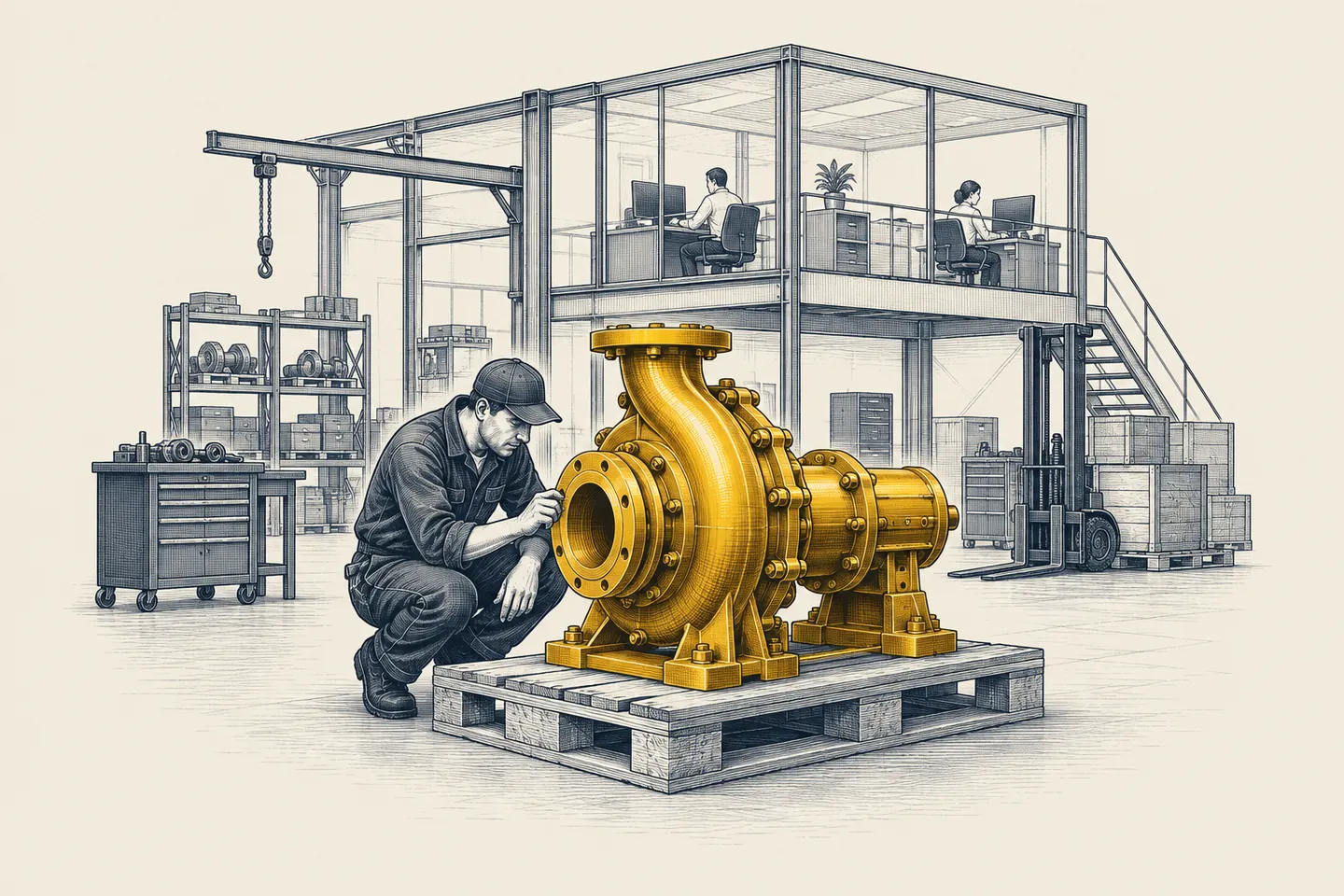
Check one thing before you settle on that. In many industrial companies, the advice from salespeople and engineers is part of what customers pay for. That advice is exactly the kind of knowledge AI makes easy to get. Put it through the three questions too.
The engineering firm is in a different place. Its savings come straight out of what it bills. An AI programme is usually measured on what it saves, so it will keep reporting that as good news. Nobody in the programme is asked whether the business model still works. That question has to come from you.
05 / 05 · The move
Decide how you charge before a competitor does
In short
Once AI makes what you sell cheaper, someone will change the price. Decide how you charge and what you sell before a competitor makes that choice for you.
For the engineering firm, the move is to charge for the result instead of the hours: a fixed price for the finished design. Then AI makes the firm more profitable instead of cheaper. Part of the saving stays as margin. The rest can go into a better result, or into work that never paid at the old rates.

For your own company, four steps:
Write the sentence
What your customers pay you for, and what you charge for. Do it before you approve another AI project. It is also where an AI strategy starts.
Ask the three questions with your leadership team
If any answer is yes, take it to the board.
Ask what a new competitor would build
Someone has a hundred million to build your company from scratch today. What do they build, and what do they skip? Have everyone write down their answer before anyone speaks.
Change how you charge before you have to
If AI cuts the work in half, price the result instead of the time.
The next decision
Your next task is to determine whether AI changes only your cost base or also makes what customers pay for cheaper, then identify where that exposure sits. GRAIL's five-minute assessment asks a short set of questions about your company and sends a personalized report by email showing where AI could give you an edge. Use that report to decide which parts of the business model deserve management attention before the next round of AI projects.
A short set of questions about your company. Your personalized report on where AI could give you an edge arrives by email.
Questions CEOs ask about this
How can I tell whether AI threatens our business model or mainly changes our cost base?
Write down in one sentence what your customers pay you for. Then ask whether AI makes that cheaper to get, from you or from anyone else. If AI only cuts the cost of your own work, it is a cost question: run it well and keep the savings. If it cuts the price of what customers pay for, it is a business model question for you and the board.
How do we tell a threat from an efficiency gain?
Look at what the saving touches. If AI only makes your own work cheaper and your price stays the same, it is an efficiency gain and you keep it. If it makes the thing customers pay for cheaper, it is a threat, because the saving goes to whoever lowers the price first.
Which of our revenue is most at risk?
Revenue priced per hour or per document, and revenue that pays for know-how anyone can now get from an AI model. Revenue tied to a result you are accountable for is the safest.
When is getting better at the current model risky?
When every gain ends up as a lower bill for the customer. If you charge by the hour, getting faster means billing less. Then the better you get, the less you earn.
Who should own this question?
The CEO and the board. An AI programme is usually measured on what it saves, so it reports the cost side well. It is not set up to ask whether the business model still works.
We make physical products. Does this apply to us?
Mostly on the cost side. The exception is the advice your salespeople and engineers give around the product. If customers pay for that advice, put it through the three questions.

Founder, GRAIL
Johan has spent fifteen years in management consulting and executive leadership, including as Chief Product Officer of a SaaS company. He founded GRAIL to help European leadership teams work out what AI changes at the core of their business. He is the author of The Execution Revolution and the host of the ThinkRoom podcast.
Related reading
Sources
- AI in engineering consulting: the week of work that now takes a day, and why the firm has to charge for the result. (accessed October 8, 2026)
- What is AI consulting: the question of what customers pay you for, and which parts AI made cheap, fast or free. (accessed October 8, 2026)
- Your Best Quarter Is the Warning: the question of what a competitor with a hundred million would build. (accessed October 8, 2026)
Next scheduled review: January 7, 2027